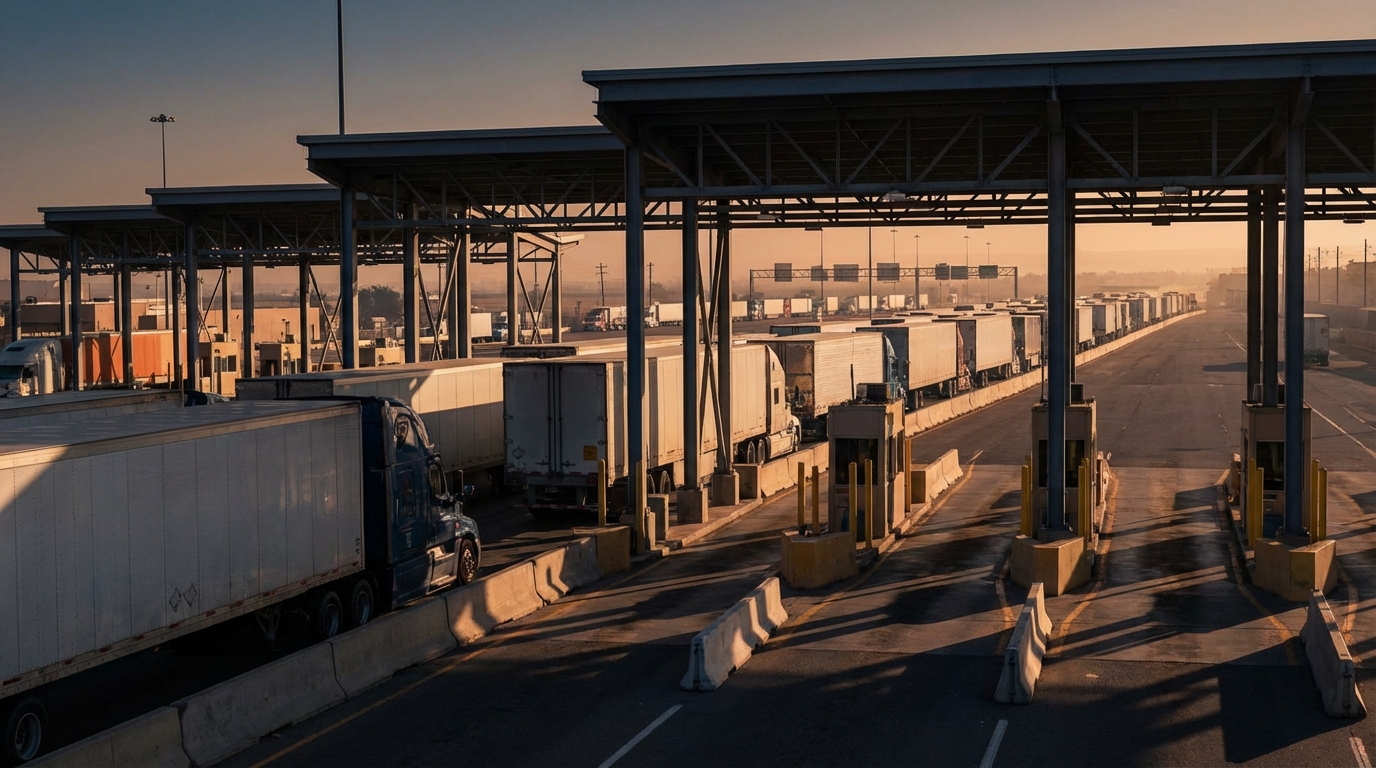
The Port of New York and New Jersey is the largest port on the East Coast and the busiest port in the eastern United States by container volume. It’s the primary maritime gateway for the most densely populated consumer market in America — the Northeast corridor from Washington, D.C. to Boston. During the IEEPA tariff period, virtually every container that crossed its docks from a targeted country carried a surcharge that the Supreme Court has now declared unconstitutional.
Estimated IEEPA duties collected at the Port of NY/NJ: $18-24 billion during the tariff period. That number reflects the port’s massive volume, diverse trade lanes, and heavy exposure to Chinese, Vietnamese, and other Asian-origin imports.
If you import through Port Newark, Elizabeth Marine Terminal, or any other NY/NJ port facility, this guide walks you through exactly how to get your money back.
Port of NY/NJ: The Numbers
The Port Authority of New York and New Jersey operates a port complex that spans both states, with major container terminals in Newark, Elizabeth, Bayonne, and on Staten Island. Understanding the port’s scale helps you appreciate the size of the IEEPA recovery opportunity.
Port of NY/NJ key statistics (2025):
| Metric | Value |
|---|---|
| Total container volume | 9.1 million TEUs |
| U.S. East Coast market share | ~35% |
| Top import origin | China (~40% of import value) |
| Number of container terminals | 6 major facilities |
| Weekly vessel calls | 60+ |
| CBP District | 4601 |
| Estimated IEEPA exposure | $18-24 billion |
Terminal Facilities
The port’s container operations are concentrated at several key terminals:
- Port Newark Container Terminal (PNCT): Operated by Ports America, handles multiple carrier alliances
- APM Terminals Elizabeth: One of the port’s busiest facilities, heavy trans-Pacific and intra-Asia services
- Maher Terminals (Elizabeth): Major terminal with diverse carrier base
- Global Container Terminals (GCT Bayonne): Growing facility on the Upper Bay
- GCT New York (Staten Island): Newer facility with capacity for the largest vessels
- Red Hook Container Terminal (Brooklyn): Smaller facility for niche services
All terminals fall under CBP District 4601, meaning your refund claims are filed with one district regardless of which terminal your cargo used.
What Comes Through NY/NJ — and What’s Refundable
The Port of NY/NJ handles the most diverse commodity mix of any U.S. port. While the Port of LA/Long Beach is dominated by Chinese consumer goods and Houston by industrial cargo, NY/NJ handles everything from high fashion to heavy machinery.
IEEPA-impacted import categories at NY/NJ:
| Category | Annual Import Value | IEEPA Rate | Est. Surcharge Collected |
|---|---|---|---|
| Fashion/Apparel | $24 billion | 20-34% | $4.8-$8.2 billion |
| Consumer Electronics | $16 billion | 20-34% | $3.2-$5.4 billion |
| Gems & Jewelry | $12 billion | 20-34% | $2.4-$4.1 billion |
| Pharmaceuticals | $10 billion | 20-25% | $2.0-$2.5 billion |
| Food & Beverages | $8 billion | 20-25% | $1.6-$2.0 billion |
| Furniture/Home | $6 billion | 20-34% | $1.2-$2.0 billion |
| Chemicals/Plastics | $5 billion | 20-25% | $1.0-$1.3 billion |
| Auto Parts | $4 billion | 20-25% | $0.8-$1.0 billion |
The Fashion Industry’s Refund
New York’s fashion industry is the single largest category of IEEPA-impacted imports at the port. Chinese-origin apparel — from fast fashion to premium brands — carried the full 20-34% surcharge. Vietnamese garments, which have been growing as an alternative to Chinese production, also carried IEEPA rates on many items.
For fashion importers, the refund calculus is straightforward: every garment that entered through NY/NJ from an IEEPA-targeted country generated a refundable surcharge. If you import fashion goods, the complete guide to IEEPA tariff refunds explains the legal basis and process.
Pharmaceuticals and the API Supply Chain
The Port of NY/NJ (and JFK Airport, which falls under the same CBP district) handles a critical share of America’s pharmaceutical imports. Active pharmaceutical ingredients from China, finished formulations from India, and specialty chemicals from other targeted countries all carried IEEPA surcharges.
Pharmaceutical entries are often complex — multiple HTS lines, multiple tariff programs, high declared values. The IEEPA component needs to be isolated from Section 301, antidumping, and other duty types. An experienced broker can handle this, and the per-entry refund is often very large. Check your eligibility and estimated amount.
Recovery Strategy for NY/NJ Importers
Filing Volume and Processing Times
CBP District 4601 is going to receive the second-highest volume of IEEPA refund claims in the country (behind LA/Long Beach’s District 2704). The practical impact: expect processing times at the longer end of the range for both post-summary corrections and protests.
This is not a reason to delay — it’s a reason to file as soon as possible. The queue is going to grow, and your position in it is determined by when you file.
Post-Summary Corrections for Recent Entries
Entries filed at NY/NJ from approximately June 2025 onward may still be unliquidated, making them eligible for post-summary corrections — the fastest recovery path. Your broker files the PSC through ACE, removing the 9903-series IEEPA HTS codes, and CBP recalculates the duty owed.
For the step-by-step process, see our 7-step IEEPA filing guide.
Protests for Liquidated Entries
Entries from the early IEEPA period (February-May 2025) that have already liquidated need formal CBP protests within the 180-day protest window. For NY/NJ importers, the earliest entries to liquidate were likely those filed in February 2025, which may have liquidated around December 2025 — putting the protest deadline around June 2026.
Check your dates. If you have entries approaching the 180-day mark, file protective protests immediately. Don’t wait for a complete analysis — file the protest to preserve your rights, and refine the details later.
CIT Litigation
Some NY/NJ importers will have entries where the protest window has closed. CIT litigation is the remaining option. The Court of International Trade is physically located in New York City, which is a practical convenience for NY-area importers and their attorneys. Many of the nation’s top trade attorneys are based in the NY area and admitted to the CIT bar.
Immediate Capital for Large Claims
NY/NJ importers with seven-figure or eight-figure IEEPA refund claims may prefer immediate capital through claim assignment. Rather than waiting years for government processing, you receive a lump sum now. For fashion importers and distributors carrying significant working capital strain from a year of IEEPA surcharges, this can be the right strategic choice.
Get your free Impact Assessment →
The Air Cargo Dimension
CBP District 4601 covers not just the maritime port but also JFK International Airport and Newark Liberty International Airport. These are two of the busiest air cargo hubs in the country.
JFK Air Cargo
JFK handles approximately 1.4 million tons of international air freight annually. High-value goods — electronics, pharmaceuticals, luxury items, express shipments — flow through JFK’s cargo terminals from IEEPA-targeted countries daily. The per-shipment IEEPA surcharge on air cargo is often substantial because of the high declared values involved.
If you receive air cargo through JFK, these entries are filed under the same District 4601 and are just as eligible for IEEPA refunds as your sea cargo. Don’t overlook them — air cargo entries are commonly left out of initial refund analyses.
Newark Liberty Air Cargo
Newark’s air cargo operation is smaller than JFK’s but still significant, particularly for express and industrial shipments. Same CBP district, same refund eligibility.
Special Considerations for NY/NJ Importers
Multi-Mode Importers
Many NY/NJ importers use both sea and air cargo through the same CBP district. This simplifies filing (one district for everything) but requires comprehensive data gathering. Make sure your ACE data pull captures both maritime entries and air cargo entries.
Bonded Warehouses and FTZs
The NY/NJ port area has a dense network of bonded warehouses and Foreign Trade Zones. If you used these facilities during the IEEPA period, the tariff treatment depends on when the goods were entered for consumption (withdrawn from the FTZ or bonded warehouse). IEEPA duties assessed at withdrawal are refundable. Your broker should know the specifics of your entries.
Consolidated Shipments
NY/NJ handles a high volume of LCL (less-than-container-load) consolidated shipments, particularly for smaller fashion importers and specialty goods companies. If you import via LCL, your refund is based on your individual entries, not the full container’s entry. Your consolidator or broker should be able to provide your specific entry data.
The Volume Discount Illusion
Some importers assume that the large volume of claims at NY/NJ will create efficiency gains in processing — that CBP will develop faster procedures to handle the flood. Don’t count on it. CBP processes each claim individually based on established procedures, and there’s no evidence that high-volume districts get additional resources or faster processing tracks. The only way to speed up your refund is to file early and file accurately.
The Importer of Record Question
In the NY/NJ import ecosystem, some importers use buying agents, trading companies, or overseas intermediaries who may be listed as the importer of record. If someone other than your company is the importer of record on the entry summary, the refund rights may belong to them, not you. Check your entry summaries and your contractual arrangements to clarify who holds the refund rights. An impact assessment will flag any importer-of-record issues.
The Importer Community and Recovery Resources
New York’s Trade Infrastructure
New York has the deepest trade infrastructure in the country. The customs broker community is enormous, trade attorneys are plentiful, and the Court of International Trade is located in Manhattan. This ecosystem is a significant advantage for NY/NJ importers pursuing IEEPA recovery — but it also means competition for professional services will be intense as thousands of importers pursue claims simultaneously.
Broker Selection and Capacity
If your existing customs broker is handling your IEEPA recovery, confirm they have adequate capacity. Large brokers in the NY/NJ area are fielding requests from hundreds of clients simultaneously. Some are prioritizing by claim size, which means smaller importers may face delays.
If you’re not satisfied with your broker’s responsiveness on IEEPA recovery, consider engaging a specialized claims advisory service in parallel. The cost of waiting to file — both in terms of delayed refunds and approaching protest deadlines — may justify the cost of supplementary professional help.
CIT Proximity
The Court of International Trade at One Federal Plaza in Lower Manhattan is the sole U.S. court with jurisdiction over customs duty disputes. For NY/NJ importers who need CIT litigation — because protest windows have expired or because the claim is complex enough to warrant judicial resolution — the court’s physical proximity is a practical advantage. Many CIT-admitted attorneys are based in the NY metro area, reducing the logistical burden of pursuing litigation.
Professional Organizations
The Customs and International Trade Bar Association (CITBA), headquartered in New York, is a key resource for importers navigating IEEPA recovery. Industry groups like the Fashion Accessories Shippers Association (FASA) and the American Association of Importers and Exporters (AAEI) are also providing guidance to their members on IEEPA recovery procedures.
Data Consolidation
For NY/NJ importers using multiple brokers, trade lanes, or transport modes, data consolidation is the critical first step. An impact assessment pulls data directly from ACE, capturing every entry where you are the importer of record — regardless of which broker filed it. This is the most reliable way to ensure nothing is missed, and it provides the foundation for a complete recovery plan.
Calculating Your NY/NJ IEEPA Refund
- Request your ES-003 report from ACE covering all District 4601 entries from February 4, 2025, through February 24, 2026
- Include both maritime and air cargo entries in the data pull
- Filter for HTS codes under 9903.01 and 9903.02 — these are the IEEPA tariff lines
- Sum the duties paid under those codes
- Categorize by liquidation status for recovery path assignment
- Map protest deadlines for liquidated entries
Representative refund estimates:
| Importer Profile | Annual Import Value | Estimated IEEPA Refund |
|---|---|---|
| Small fashion/specialty | $1M-$5M | $150K-$1.2M |
| Mid-size distributor | $10M-$50M | $1.5M-$10M |
| Large consumer goods importer | $50M-$200M | $8M-$35M |
| Major fashion house/pharma | $100M+ | $15M+ |
Frequently Asked Questions
My broker says they can handle the IEEPA filing automatically. Should I still get an independent assessment?
Your broker’s filing capability is important, but an independent impact assessment serves a different purpose. It verifies that your broker has captured every entry, confirms the calculation of refundable amounts, identifies entries at risk of missing protest deadlines, and evaluates which recovery path is optimal for each entry. Think of it as an audit of your refund claim before it’s filed — and it’s free.
I import through both NY/NJ and Savannah. Do I need separate claims?
Yes. NY/NJ entries are filed with CBP District 4601, and Savannah entries are filed with District 1703. Each district processes claims independently. Your broker can handle both, but make sure both port districts’ entries are included in your recovery plan. See our Port of Savannah recovery guide for Savannah-specific details.
How does the IEEPA refund interact with Section 301 duties on my entries?
The IEEPA refund covers only the IEEPA-specific surcharges (HTS 9903.01 and 9903.02 series). Section 301 duties (HTS 9903.88 series) are a separate tariff program and are unaffected by the Supreme Court’s IEEPA ruling. Multi-tariff entries are common at NY/NJ, and your broker will isolate the IEEPA component for the refund claim. For more on how different tariff programs interact, see the country-by-country refund guide.
Take Action Now
The Port of New York and New Jersey is the East Coast’s largest import gateway — and one of the largest IEEPA refund opportunities in the country. Whether you import fashion through Port Newark, electronics through JFK air cargo, or pharmaceuticals through any NY/NJ facility, your IEEPA duties are recoverable.
Start your free Impact Assessment at tariffresolution.com/assessment. We’ll analyze every entry across all NY/NJ terminals and air cargo facilities — Port Newark, Elizabeth, Bayonne, Staten Island, JFK, and Newark Liberty — calculate your total IEEPA refund across every commodity type and country of origin, and build a recovery plan that prioritizes deadlines and maximizes your return. For fashion importers, pharma companies, consumer goods distributors, and every other type of NY/NJ importer, the assessment provides the complete picture you need. Free to start, no obligation. The Port of New York and New Jersey collected billions in IEEPA duties that are now refundable. Your share is waiting — don’t leave it there.