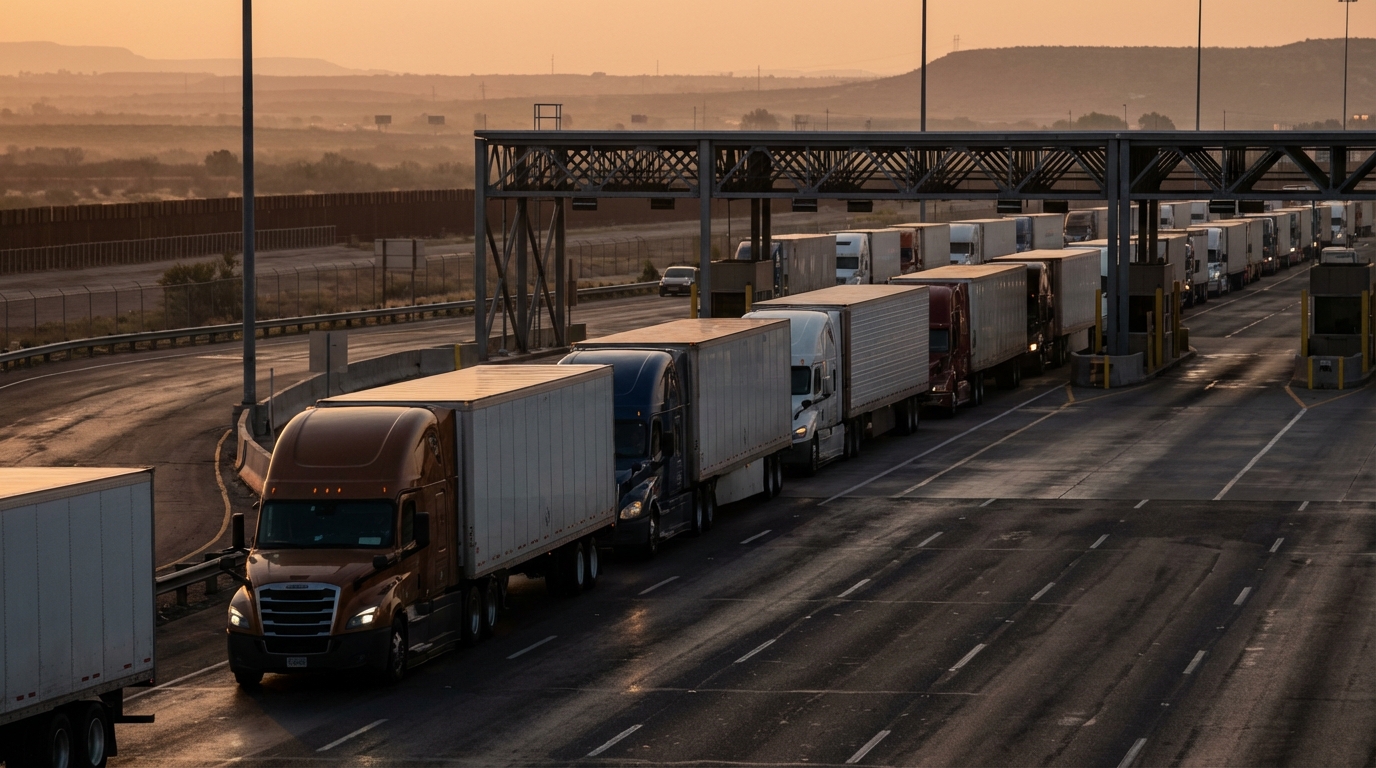
The Northwest Seaport Alliance — the unified marine cargo operation of the Port of Seattle and Port of Tacoma — is the fourth-largest container gateway in the United States and the first port of call for many trans-Pacific shipping services. Its position on the Great Circle Route between Asia and North America means it handles a disproportionate share of Chinese and broader Asian imports, making it one of the most IEEPA-exposed ports in the country relative to its size.
Estimated IEEPA duties collected at Seattle/Tacoma: $5-8 billion during the tariff period. That’s driven by the ports’ heavy Asian import concentration and the high IEEPA surcharge rates that applied to Chinese, Vietnamese, and other Asian-origin goods.
If you import through NWSA terminals, this guide covers exactly what you need to recover every refundable dollar.
The Northwest Seaport Alliance: Structure and Scale
Two Ports, One Alliance
The NWSA was formed in 2015 when the ports of Seattle and Tacoma agreed to jointly manage their marine cargo operations. The alliance operates terminals at both ports under a unified commercial strategy, giving shipping lines a single point of contact for the Puget Sound gateway.
For customs purposes, both ports fall under CBP District 3001, which simplifies the refund filing process. Whether your containers discharged at a Seattle terminal or a Tacoma terminal, your claims are all filed with the same district.
NWSA key statistics (2025):
| Metric | Value |
|---|---|
| Total container volume | 3.5 million TEUs |
| U.S. West Coast market share | ~18% |
| Top import origin | China (~52% of import value) |
| Container terminals | 5 major facilities |
| Weekly vessel calls | 35+ |
| CBP District | 3001 |
| Rail connections | BNSF, Union Pacific |
Terminal Facilities
Seattle terminals:
- Terminal 5 (T-5) — recently modernized, handles the largest vessels
- Terminal 18 (T-18) — operated by SSA Terminals, major trans-Pacific services
- Terminal 30 (T-30) — handles various carrier services
Tacoma terminals:
- Husky Terminal — major facility operated by SSA Terminals
- Washington United Terminals (WUT) — operated by Evergreen and partners
- Pierce County Terminal — various services
All terminals process entries under District 3001, so your refund claim encompasses every NWSA terminal you used during the IEEPA period.
What Flows Through Seattle/Tacoma
The NWSA’s import mix is heavily weighted toward Asian-origin goods — exactly the trade lanes most impacted by IEEPA tariffs.
Top IEEPA-impacted categories at Seattle/Tacoma:
| Category | Annual Import Value | IEEPA Rate | Est. Surcharge |
|---|---|---|---|
| Consumer Electronics | $6 billion | 20-34% | $1.2-$2.0 billion |
| Industrial Machinery | $4 billion | 20-25% | $0.8-$1.0 billion |
| Furniture & Home Goods | $3.5 billion | 20-34% | $0.7-$1.2 billion |
| Apparel & Footwear | $3 billion | 20-34% | $0.6-$1.0 billion |
| Agricultural Equipment | $1.5 billion | 20-25% | $0.3-$0.4 billion |
| Auto Parts | $1.5 billion | 20-25% | $0.3-$0.4 billion |
| Seafood & Food Products | $1.2 billion | 20-25% | $0.2-$0.3 billion |
The First-Port-of-Call Advantage
Seattle and Tacoma sit closer to major Asian ports than any other major U.S. container gateway (except Alaska). This geographic advantage means many trans-Pacific shipping services make Seattle/Tacoma their first U.S. port of call, discharging cargo before continuing to Oakland, LA, or through the Panama Canal.
For importers, this means faster transit times from Asia — but it also means your goods may have been among the first to be assessed IEEPA duties when the tariffs took effect in February 2025. If you received early-period shipments through Seattle/Tacoma, those entries may have some of the earliest liquidation dates in the country. Check your protest window deadlines immediately.
The Tech Supply Chain
The Pacific Northwest is home to Amazon, Microsoft, Costco, Boeing, T-Mobile, and a vast network of tech companies and their suppliers. This tech ecosystem drives enormous demand for imported electronics, components, and consumer products from China and other Asian manufacturing centers.
Amazon alone imports massive container volumes through NWSA terminals for its fulfillment network. While Amazon’s corporate-level IEEPA recovery is their own affair, the thousands of smaller companies that sell on Amazon, supply Amazon, or compete with Amazon also import through Seattle/Tacoma — and their IEEPA duties are just as refundable. See the complete guide to IEEPA tariff refunds for the full legal basis.
Recovery Strategy for NWSA Importers
Timing Is Everything
Seattle/Tacoma’s position as a first-port-of-call means entries here were often processed slightly earlier than identical shipments at other West Coast ports. That translates to slightly earlier liquidation dates and slightly earlier protest deadlines. Don’t assume your deadlines match the national averages — pull your actual liquidation dates from ACE.
The Four Paths Applied to NWSA
All four recovery paths are available to NWSA importers:
Post-Summary Corrections — For unliquidated entries (generally mid-2025 onward). This is the fastest path, processed in days to weeks. Your broker files through ACE to remove 9903-series IEEPA HTS codes.
Formal Protests — For liquidated entries within the 180-day window. File as early as possible — District 3001 will face significant claim volume.
CIT Litigation — For entries past the protest window. Requires a CIT-admitted trade attorney.
Immediate Capital — Claim assignment for importers who prefer certainty and speed over waiting for government processing.
Filing Process
Follow the 7-step filing guide:
- Pull your ES-003 report from ACE for all District 3001 entries during the IEEPA period
- Identify all 9903.01 and 9903.02 HTS codes
- Sum associated duties
- Check liquidation status for each entry
- File PSCs for unliquidated entries
- File protests for liquidated entries within the 180-day window
- Evaluate CIT litigation or claim assignment for remaining entries
Get your free Impact Assessment →
Industry-Specific Guidance
Consumer Electronics Importers
Electronics are the highest-value import category at Seattle/Tacoma, and they carried the highest IEEPA surcharge rates (up to 34% on Chinese-origin goods). If you import consumer electronics — smartphones, laptops, monitors, peripherals, components — through NWSA terminals, your per-container IEEPA surcharge was likely $30,000-$136,000 depending on commodity and declared value.
Use the refund amount calculator to estimate your total.
Aerospace Supply Chain
Boeing’s massive Puget Sound manufacturing operation drives a broad aerospace import supply chain. Titanium from China, avionics components, specialized materials, and interior furnishings from IEEPA-targeted countries all carried surcharges. Aerospace entries are often high-value with complex HTS classifications — work with a broker experienced in Chapter 88 entries to ensure complete capture of IEEPA duties.
Retail and Distribution
Costco (headquartered in Issaquah, WA) and the broader Pacific Northwest retail sector import consumer goods through NWSA terminals in enormous quantities. Chinese-origin consumer products — from food to furniture to clothing — carried IEEPA surcharges of 20-34%. If you’re a retailer or distributor, your IEEPA refund likely represents a meaningful boost to your bottom line.
Seafood Industry
Alaska and Pacific Northwest seafood operations import processing equipment, packaging materials, and — critically — Chinese-processed seafood through Seattle/Tacoma. The seafood industry operates on tight margins, making IEEPA recovery particularly impactful. Check your eligibility by country of origin for the specific rates that applied to your imports.
Agricultural Importers
Washington state is a major agricultural producer, and the agricultural sector imports equipment, chemicals, and inputs from IEEPA-targeted countries. Fertilizers, pesticides, and farm machinery from China carried surcharges. These imports may not be individually large, but cumulative IEEPA exposure across a year of operations adds up.
Working Capital and Cash Flow Considerations
The PNW Business Impact
For Pacific Northwest importers, the IEEPA tariffs represented more than just an added cost — they disrupted the economics of doing business in a region where Asian supply chains are fundamental to the economy. From tech companies sourcing components to retailers stocking shelves to manufacturers buying raw materials, the 20-34% surcharge strained cash flow across the board.
The refund of those duties represents a meaningful cash injection. For a mid-size PNW importer carrying $5-10 million in IEEPA overpayments, the refund equals months of operating capital that was effectively locked up by the government.
Time Value of Money
Every month your refund sits in CBP’s accounts instead of yours, you’re losing the productive value of that capital. For businesses operating in the fast-moving PNW economy — where tech cycles are short and competitive dynamics are intense — this opportunity cost is real.
This is why the immediate capital option through claim assignment exists. Instead of waiting 18-36 months for government processing, you receive 70-85 cents on the dollar now. The discount is the price of certainty and speed — and for many PNW businesses, it’s a price worth paying.
The Competitive Filing Advantage
District 3001 will process a significant volume of IEEPA claims, but its workload is smaller than LA/Long Beach (District 2704) or NY/NJ (District 4601). This means PNW importers may see faster processing times than importers at larger ports — but only if they file early. The queue is first-come, first-served.
The cost of waiting compounds over time. File now, and you’re positioned for the fastest possible processing. Wait, and you fall behind importers who acted sooner.
Seasonal Import Patterns
PNW imports have seasonal patterns — heavier in summer and fall (pre-holiday inventory building) and lighter in winter and spring. This means your IEEPA duty payments may be concentrated in the Q3/Q4 2025 period, with those entries still potentially unliquidated and eligible for the fastest recovery path (post-summary corrections). Check the seasonality of your entries to identify the optimal recovery approach for each period.
Multi-Port Considerations
Many NWSA importers also use other West Coast ports, particularly LA/Long Beach. If you route some cargo through Seattle/Tacoma and some through Southern California, you need to file claims with both districts:
- NWSA entries: Filed with CBP District 3001
- LA/Long Beach entries: Filed with CBP District 2704
- Oakland entries: Filed with CBP District 2809
Make sure your ACE data pull covers all districts, or work with a broker who can consolidate your multi-port data. An impact assessment captures entries across all ports.
Calculating Your Seattle/Tacoma IEEPA Refund
- Pull ACE data for all District 3001 entries from February 4, 2025, through February 24, 2026
- Include any entries through other ports you also use (LA, Oakland, etc.)
- Filter for 9903-series HTS codes and sum associated duties
- Check liquidation dates — NWSA entries may have earlier dates than other ports
- Map protest deadlines and prioritize entries closest to expiration
Estimated refund ranges:
| Importer Profile | Annual Import Value | Estimated IEEPA Refund |
|---|---|---|
| Small tech/electronics importer | $2M-$10M | $300K-$2M |
| Mid-size retailer/distributor | $10M-$50M | $1.5M-$8M |
| Aerospace supplier | $5M-$30M | $600K-$5M |
| Large PNW-based company | $50M-$200M | $7M-$30M |
Frequently Asked Questions
My containers arrived at Tacoma’s Husky Terminal but my broker is in Seattle. Does that matter?
Not at all. Both Seattle and Tacoma terminals are within CBP District 3001, and your broker can file claims electronically through ACE regardless of their physical location. The terminal where your containers discharged has no impact on the refund filing process.
I also import through the Canadian border at Blaine, WA. Is that the same CBP district?
No. The Blaine border crossing is CBP District 3004, separate from the NWSA’s District 3001. You’ll need to file separate claims for your Blaine entries (Canadian imports subject to the IEEPA fentanyl tariff) and your NWSA entries (Asian imports subject to China and other IEEPA rates). See our Pacific Northwest importer guide for details on both corridors.
Some of my goods are destined for Alaska via Seattle. Does that affect the refund?
No. The IEEPA tariff was assessed at Seattle (the port of entry into U.S. customs territory), regardless of the goods’ final domestic destination. Whether your goods go to an Alaska-bound barge or a Seattle warehouse, the refund claim is filed with District 3001 based on the original entry. Alaska isn’t a separate customs territory — goods cleared at Seattle for Alaska transit have their full entry processed in District 3001.
Filing Best Practices for NWSA Importers
Start With Your Largest Entries
If you have a diverse portfolio of entries through Seattle/Tacoma, prioritize the highest-value entries first. A single container of electronics worth $400,000 at a 34% IEEPA rate generated $136,000 in refundable duties — that one PSC or protest filing is worth more than dozens of smaller entries combined. Get the big wins filed immediately, then work down to smaller entries.
Coordinate Air and Sea Claims
If you import through both NWSA terminals and Sea-Tac Airport, both fall under District 3001 — but they’re processed through different CBP units. Make sure your broker is filing claims for both transport modes. Air cargo entries are easy to overlook when focusing on container volume, but the high per-shipment values of air cargo can make these entries disproportionately valuable for recovery.
Track Processing Status
After filing PSCs or protests, monitor their processing status through ACE. CBP provides status updates in the system, and your broker should be tracking these on your behalf. If a PSC is rejected or a protest denied, you have options — including escalation to the CIT. Don’t let a denied claim sit without follow-up.
Don’t Overlook Small Entries
PNW importers sometimes focus their recovery effort on large container shipments and overlook smaller entries — LCL consolidated shipments, air cargo, and sample or prototype imports. These smaller entries still carried IEEPA surcharges, and the cumulative total across dozens of small entries can be significant. A thorough claim captures every entry, regardless of size. This is another area where a professional impact assessment adds value — it pulls every entry from ACE, not just the ones you remember.
Take Action Now
The Northwest Seaport Alliance is the Pacific Northwest’s gateway to Asian trade — and one of the most IEEPA-impacted port complexes in the country. Whether you import electronics, retail goods, aerospace components, or industrial materials through Seattle or Tacoma, your IEEPA duties are recoverable.
Start your free Impact Assessment at tariffresolution.com/assessment. We’ll analyze every entry across all NWSA terminals — T-5, T-18, T-30, Husky, WUT, and Pierce County — plus Sea-Tac air cargo and any other port districts you use. We’ll calculate your total IEEPA refund, identify the optimal recovery path for each entry based on liquidation status and deadline proximity, and flag any protest windows that need immediate protective filings. The assessment covers your complete entry portfolio, including entries at other ports if you route cargo through multiple West Coast gateways. Free to start, no obligation. Seattle and Tacoma importers paid billions in IEEPA duties on Asian imports — and every dollar is recoverable. Let’s make it happen.