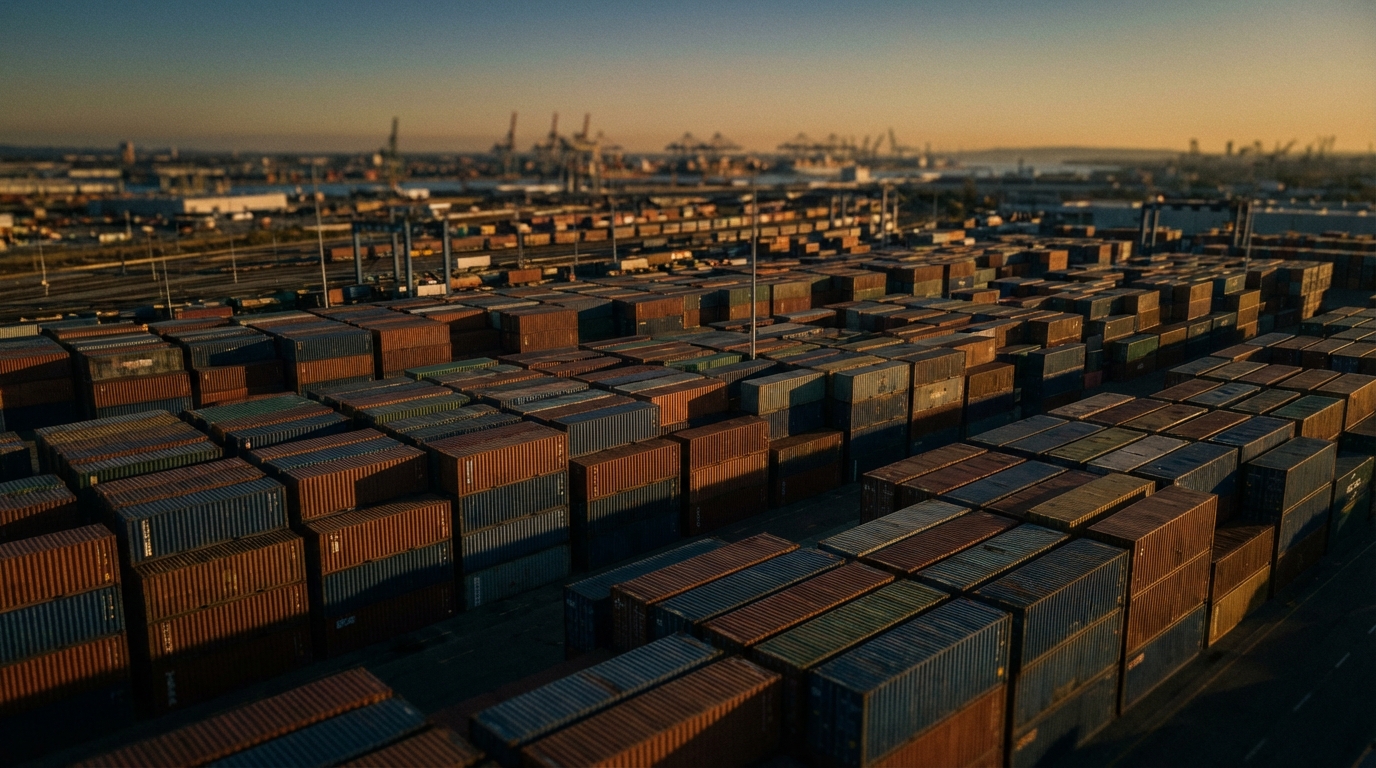
The IEEPA tariffs triggered the largest wave of supply chain restructuring since the Section 301 tariffs of 2018-2019. Companies that had spent decades building manufacturing relationships in China suddenly faced 20-34% surcharges that made their supply chains uneconomical. Many responded by nearshoring — moving production to Mexico, Vietnam, India, or other countries outside the scope of IEEPA tariffs.
Then the Supreme Court struck down IEEPA tariffs, and the landscape shifted again. Companies that invested millions in supply chain diversification are now looking at a China that’s tariff-free (at least from IEEPA) and wondering whether those investments were premature. Meanwhile, they have a year’s worth of IEEPA duties to recover — and the supply chain changes they made during that year create complications for the recovery process.
This guide covers both sides: how to recover IEEPA refunds when your supply chain shifted during the tariff period, and how to think about your go-forward sourcing strategy now that IEEPA is gone.
The IEEPA Refund Is Backward-Looking. Your Supply Chain Is Forward-Looking.
Before diving into the details, it’s important to separate two distinct questions:
Question 1 (backward-looking): How do I recover the IEEPA duties I paid? This is a financial recovery exercise. You paid duties, those duties are refundable, and the process for recovering them is the same regardless of whether you’ve since changed your supply chain. The four recovery paths apply to every IEEPA-affected entry.
Question 2 (forward-looking): Should I keep my nearshored supply chain or move production back to China? This is a strategic decision that depends on factors far beyond IEEPA — quality, lead times, geopolitical risk, labor costs, IP protection, and the possibility of future tariffs.
Don’t confuse the two. The IEEPA refund is money owed to you from past imports. Pursue it. Your supply chain decisions going forward should be based on total cost of ownership, not on the assumption that tariff-free China importing is permanent.
How Supply Chain Shifts Affect Your IEEPA Recovery
If you moved production during the IEEPA period, several scenarios create recovery complications:
You Shifted to a New Country Mid-Year
Many importers began transitioning production from China to alternative countries (Mexico, Vietnam, India, Thailand) during 2025. If you were importing from China for the first half of the IEEPA period and from an alternative country for the second half, your IEEPA exposure is limited to the China-origin entries.
Recovery implication: Your ES-003 report will show IEEPA tariff codes only on the China-origin entries. Entries from the new sourcing country won’t carry IEEPA charges (assuming the country wasn’t subject to its own IEEPA tariffs). The recovery process is straightforward — file on the China entries and ignore the non-IEEPA entries.
Data consideration: If you changed customs brokers as part of the supply chain shift (which is common — brokers often specialize by trade lane), your data may be split across two brokers. See the broker change guide for handling this.
You Used a Transshipment Model
Some companies responded to IEEPA tariffs by routing goods through a third country — shipping from China to Vietnam or Malaysia for minimal processing, then re-exporting to the U.S. under the third country’s origin. This is commonly called “transshipment” or “origin laundering,” and it’s a practice that CBP aggressively investigates.
Recovery implication: If goods were properly transformed in the third country (meeting the “substantial transformation” test), the U.S. import entry would list the third country as the origin, and no IEEPA duty would have been assessed. There’s nothing to refund.
If goods were transshipped without substantial transformation, and IEEPA duties were correctly assessed (because CBP identified the true origin as China), those duties are refundable under the same rules as any other IEEPA entry.
Warning: If goods were transshipped without substantial transformation and CBP did not catch it (meaning the goods entered duty-free under a false origin claim), you have a different problem entirely. Filing an IEEPA refund would draw attention to entries that might trigger an origin investigation. This is a situation where legal counsel is essential before taking any action.
You Dual-Sourced: China Plus Alternative
The most common scenario is importers who maintained their China supply chain while simultaneously developing alternative sources. During the IEEPA period, they imported from both — paying IEEPA tariffs on the China-origin goods and standard duties on the alternative-country goods.
Recovery implication: The IEEPA refund applies to all China-origin entries during the tariff period. The alternative-country entries are unaffected. If both sets of entries were filed through the same broker, the data is clean. If different brokers handled different trade lanes, you’ll need to consolidate data.
Strategic consideration: Some dual-sourcing importers shifted a larger percentage to the alternative country as the IEEPA period progressed — meaning their IEEPA exposure may be weighted toward the early months. Early entries are more likely to be liquidated and closer to their 180-day protest deadline. Prioritize these entries in your filing.
Your Supplier Moved Production Within China
Not all supply chain shifts were cross-border. Some companies moved production within China to different regions or to suppliers they believed might qualify for exemptions (there were no region-specific IEEPA exemptions, but confusion was widespread). These moves don’t affect IEEPA refund eligibility because the tariff applied to all China-origin goods regardless of the specific region or supplier.
Recovery implication: All China-origin entries are eligible. Supplier changes within China don’t create complications for the refund process.
The Cost of Nearshoring: Can You Factor It Into Your Recovery Analysis?
The costs of supply chain diversification during the IEEPA period were substantial:
- Tooling and setup costs for new factories in alternative countries
- Quality issues during the transition (higher defect rates, slower ramp-up)
- Dual management overhead running two supply chains simultaneously
- Inventory carrying costs from safety stock buffers during the transition
- Shipping cost differences (Mexico may be closer but not always cheaper than China for all product categories)
These costs are real, but they’re not recoverable through the IEEPA refund process. The refund covers only the IEEPA duties assessed on customs entries — not the downstream business costs caused by the tariff.
However, these costs are relevant to your financial planning. Your Impact Assessment quantifies the refund. Your internal analysis should quantify the total cost of IEEPA — including the supply chain restructuring costs that won’t be recovered. Together, they give your CFO a complete picture of the IEEPA impact on your business.
| Cost Category | Recoverable? | Recovery Mechanism |
|---|---|---|
| IEEPA duties on customs entries | Yes | PSC, protest, CAPE, immediate capital |
| Non-IEEPA duties on customs entries | No (unless other grounds exist) | N/A (but may be eligible for drawback if goods are exported) |
| Nearshoring setup costs | No | N/A |
| Quality transition costs | No | N/A |
| Dual supply chain overhead | No | N/A |
| Higher per-unit costs from alternative sourcing | No | N/A |
| Statutory interest on IEEPA refund | Yes | Included in IEEPA refund |
The Go-Forward Question: Should You Move Back to China?
With IEEPA tariffs eliminated, some importers are asking whether they should reverse their nearshoring decisions and move production back to China. The economics of China sourcing just improved by 20-34% — the margin the IEEPA tariff was consuming.
This is a nuanced strategic decision that goes beyond tariff rates. Here’s a framework:
Arguments for Returning to China
Cost advantage is restored. China’s manufacturing cost advantage was built over decades. The elimination of IEEPA tariffs restores the pre-February 2025 cost structure, which was often 20-40% cheaper than alternatives even before IEEPA.
Established relationships. If you maintained supplier relationships during the IEEPA period (even at reduced volumes), restarting is faster and cheaper than building new relationships from scratch.
Quality and capability. For many product categories — electronics, complex assemblies, precision tooling — China’s manufacturing ecosystem remains unmatched. Alternative countries may offer lower costs but often can’t match the quality or capability.
Scale and speed. China’s manufacturing infrastructure allows faster ramp-up and higher volumes than most alternative countries.
Arguments for Staying Diversified
Tariff risk isn’t gone. IEEPA tariffs were struck down on constitutional grounds, but Section 301 tariffs (the original 7.5-25% tariffs on Chinese goods) remain in effect. And nothing prevents future administrations from imposing new tariffs through different legal authority. Companies that re-concentrate in China are re-concentrating their tariff risk.
Geopolitical risk. U.S.-China relations remain strained. Supply chain exposure to a single country — especially one with geopolitical tensions — creates risk beyond tariffs: export controls, sanctions, logistics disruptions, and regulatory changes.
Sunk costs. If you’ve already invested in nearshoring (tooling, facility setup, supplier development), those costs are sunk. The marginal cost of maintaining the alternative supply chain may be lower than the cost of the original diversification investment. Don’t abandon an investment just because the trigger (IEEPA) is gone.
Lead time and resilience. Nearshored supply chains (especially Mexico for U.S.-bound goods) offer shorter lead times, lower shipping costs, and greater resilience to trans-Pacific disruptions.
The Hybrid Approach
Most importers we’re advising are taking a hybrid approach: maintaining their diversified supply chain while shifting some volume back to China for products where the cost advantage is decisive. This preserves the optionality to shift volumes if tariffs return, while capturing the cost savings of the restored China pricing.
Key principle: Treat your supply chain as a portfolio. Diversification has value even when the current tariff environment favors concentration. The companies that were 100% China-sourced when IEEPA hit absorbed the most damage. Don’t repeat that mistake in reverse.
How to Factor IEEPA Refunds Into Supply Chain Decisions
Your IEEPA refund is a one-time recovery that represents money you’ve already paid. It should not factor into your go-forward sourcing decisions except as working capital.
Here’s the right way to think about it:
Use the refund as capital, not as a signal. The refund gives you cash to invest — in nearshoring, in China relationships, in inventory, in product development. Deploy it based on your strategic priorities, not based on which sourcing country it came from.
Model future scenarios without IEEPA. Your go-forward cost models should reflect current tariff rates (post-IEEPA). China imports are cheaper now than during the IEEPA period, but Section 301 tariffs still apply. Model accordingly.
Stress-test for future tariffs. When evaluating sourcing options, run a scenario where new tariffs of 15-25% are applied to China imports. If your China-sourced products remain competitive under that scenario, the sourcing decision is more robust.
Time your recovery for strategic needs. If your supply chain investment requires capital, consider whether immediate capital on your IEEPA claims provides funding faster than the government refund timeline. A strategic investment funded 3 months earlier can be worth the 10-20% discount on the refund.
What the Data Shows: IEEPA’s Impact on Sourcing Patterns
The IEEPA tariff period drove measurable shifts in U.S. import patterns. According to trade data from the period:
- U.S. imports from China declined approximately 12-15% by value during the IEEPA period compared to the prior year
- U.S. imports from Vietnam, India, and Mexico increased 8-12% over the same period
- The net effect was a partial shift — not a full exodus — from China sourcing
These aggregate numbers mask significant industry variation. Electronics imports from China declined only modestly (the supply chain is too entrenched), while apparel and consumer goods saw larger shifts. Industrial components fell somewhere in between.
The key insight for IEEPA recovery: If you shifted sourcing during the period, your China-origin import volume (and therefore your IEEPA exposure) may be lower than a full-year extrapolation would suggest. But the entries you did file from China during the first half of the IEEPA period — before the shift — are still fully recoverable.
Don’t underestimate those early entries. Many importers maintained full China volumes through mid-2025 while their alternative supply chains ramped up. The entries from February through July 2025 may represent the bulk of your IEEPA exposure even if your H2 2025 China volumes dropped significantly.
The Hidden IEEPA Exposure in “Shifted” Supply Chains
Some importers who believe they shifted away from China still have IEEPA exposure they haven’t identified:
Components still sourced from China. You may have moved final assembly to Vietnam but still source key components from China. If those components enter the U.S. separately (for domestic assembly or for incorporation into products assembled elsewhere), they carried IEEPA duties.
Packaging and accessories from China. Even if the primary product shifted to a new country, packaging materials, instruction manuals, accessories, and spare parts may still be China-origin.
China-origin goods through third-country intermediaries. If you source through trading companies in Hong Kong, Taiwan, or Singapore, the goods may still be China-origin for customs purposes. The origin follows the product, not the intermediary.
Check your ES-003 report for any entries with HTS 9903.01 or 9903.02 codes — these are your IEEPA-affected entries regardless of what your internal sourcing records show.
Practical Steps for Importers With Changed Supply Chains
1. File your IEEPA recovery regardless of supply chain changes. The refund is owed on past imports. Changes to your current sourcing don’t affect past claims.
2. Consolidate data across all brokers and trade lanes. If your supply chain shift involved new brokers, new forwarders, or new ports, your data may be fragmented. Get ES-003 reports from every broker who filed China-origin entries during the period.
3. Prioritize deadline-sensitive entries from early in the IEEPA period. Your earliest China-origin entries (February-May 2025) are most likely to be liquidated and approaching protest deadlines. These may also be your highest-volume China entries if you shifted sourcing later in the year.
4. Get your Impact Assessment. The assessment quantifies your refund, maps recovery paths, and identifies deadline risks — giving you and your CFO the data needed for both the recovery and the go-forward sourcing decisions.
Get your free Impact Assessment →
Your IEEPA refund represents the tariff cost of your pre-shift supply chain. Recover it. Then deploy the capital toward whatever supply chain strategy makes sense for your business going forward — whether that’s doubling down on nearshoring, returning to China, or maintaining a diversified portfolio. The CAPE queue fills up daily and protest windows are closing. File now, decide your supply chain strategy with refund capital in hand. The companies that treated the IEEPA period as a one-time disruption and maintained their China relationships while diversifying strategically are now in the strongest position — they’re recovering their IEEPA duties, their China supply chain is intact, and they have alternative sources for resilience. You can get to that same position, but the recovery process needs to start today.