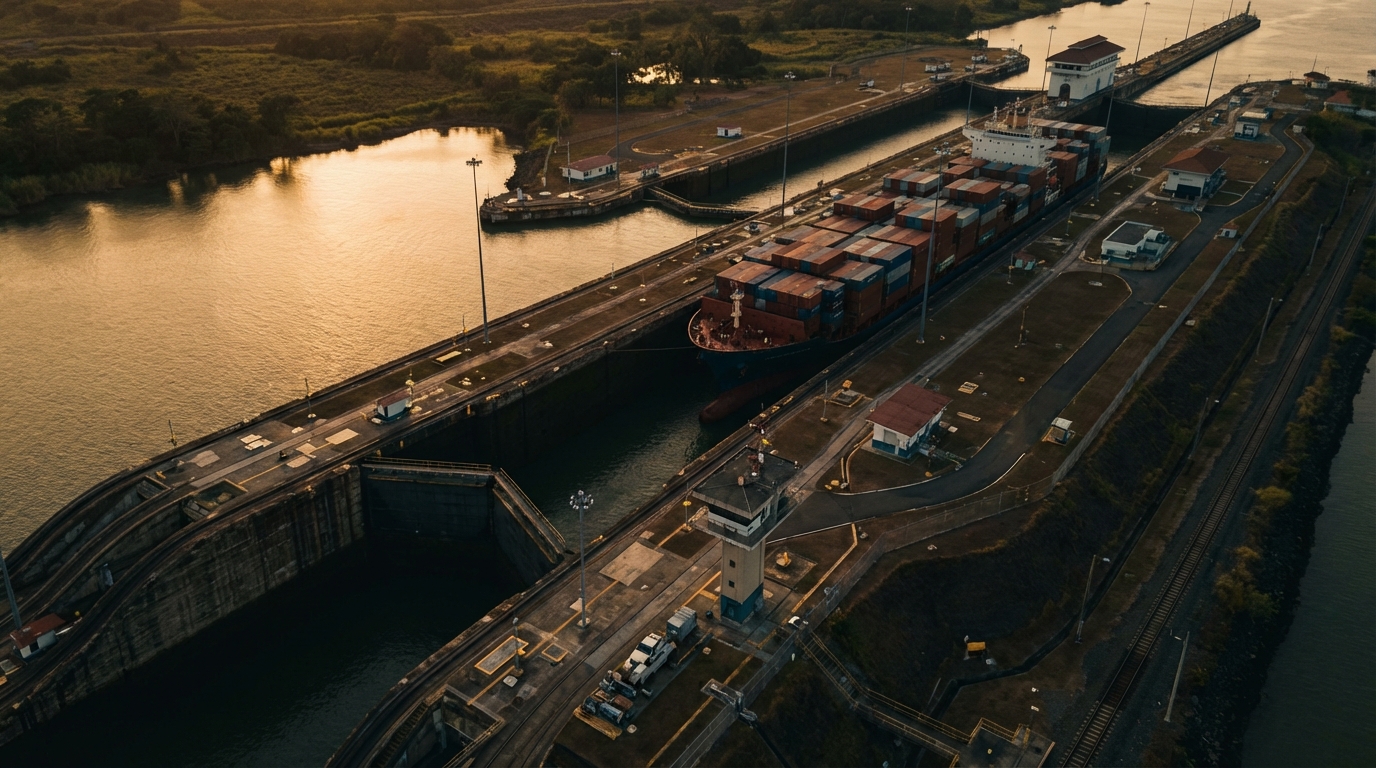
New York is the front door for East Coast imports. Between the Port of New York and New Jersey, JFK International Airport’s massive air cargo operation, and the dense network of distribution centers throughout the tri-state area, New York-based importers handle an outsized share of American commerce. And they’ve been paying an outsized share of IEEPA tariffs.
The Port of NY/NJ alone processed $230 billion in imports during 2025, making it the largest East Coast port and the third-largest in the nation overall. When the Supreme Court struck down IEEPA tariffs in February 2026, it opened the door to what could be $18-22 billion in refundable duties for importers who use New York and New Jersey as their gateway.
If you’re a New York importer — whether you bring goods by sea through Newark, by air through JFK, or overland through cross-border channels — here’s everything you need to know about recovering your money.
New York’s Import Landscape and IEEPA Exposure
New York’s import profile is distinct from other major gateway states. While California skews toward Chinese consumer electronics and Texas toward Mexican manufacturing, New York handles a remarkably diverse commodity mix that reflects the region’s role as the commercial capital of the United States.
Top import categories through New York ports:
| Industry | Annual Import Value | Primary Origins | IEEPA Rate |
|---|---|---|---|
| Fashion & Apparel | $32 billion | China, Vietnam, Bangladesh | 20-34% |
| Gems & Jewelry | $28 billion | India, China, Israel | 20-34% |
| Pharmaceuticals | $22 billion | China, India, EU | 20-25% |
| Consumer Electronics | $18 billion | China, Taiwan, South Korea | 20-34% |
| Food & Beverages | $14 billion | Multiple origins | 20-25% |
| Furniture & Home | $10 billion | China, Vietnam | 20-34% |
The Fashion and Apparel Factor
New York is the undisputed capital of America’s fashion import industry. The Garment District may have shrunk, but the buying offices, showrooms, and distribution networks that funnel imported apparel into the U.S. market are still overwhelmingly based in Manhattan and the surrounding metro area.
Fashion importers got hit especially hard by IEEPA tariffs because apparel from China — still the world’s largest garment exporter — carried the full 20-34% surcharge. A single container of fast-fashion goods worth $200,000 generated $40,000-$68,000 in IEEPA duties alone. For mid-size fashion importers moving 20-50 containers per month, the annual IEEPA exposure easily reached $10-30 million.
These duties are now fully refundable. See the complete guide to IEEPA tariff refunds for the full legal background.
Air Cargo Through JFK
JFK is the nation’s leading air cargo import airport, handling over 1.4 million tons of international air freight annually. High-value, time-sensitive goods — electronics, pharmaceuticals, luxury goods, perishables — flow through JFK’s cargo terminals 24/7.
Air cargo entries tend to have high per-unit values, which means the IEEPA surcharge on each shipment was substantial. A single air freight shipment of consumer electronics from China could carry $15,000-$50,000 in IEEPA duties. If you import via JFK air cargo, your per-entry refund amount is likely higher than sea cargo importers, even if your total volume is lower.
Air cargo entries also liquidate faster than sea cargo entries, so more of your JFK entries may already be liquidated. Check your eligibility status and liquidation dates immediately.
Port Districts and Filing Locations
Port of New York / Newark (District 4601)
The Port of NY/NJ is operated by the Port Authority and spans facilities in both states. The CBP port district covers all marine terminals in the port complex, including Port Newark, Elizabeth Marine Terminal, and container facilities at Bayonne and Staten Island.
Key facts for NY/NJ port importers:
- Third-largest U.S. container port by volume (9.1 million TEUs in 2025)
- Handles more diverse commodity types than any other East Coast port
- CBP NY/NJ processes one of the highest volumes of formal entries in the country
- Post-summary corrections filed with this district may face longer processing times due to volume
JFK International Airport (District 4601)
JFK’s air cargo operations fall under the same CBP district as the seaport but have their own cargo processing facilities and personnel. Air cargo entries are processed through the JFK Air Cargo Center.
Key considerations:
- Air cargo entries typically liquidate faster than sea entries
- High-value shipments mean larger per-entry refund amounts
- JFK handles significant pharmaceutical and medical device imports from IEEPA-targeted countries
Other Entry Points
- Port of Albany: Smaller but handles specialty industrial imports
- Champlain/Rouses Point: Northern border crossing for Canadian imports subject to IEEPA fentanyl tariffs
- Buffalo (District 0901): Major Canada border crossing — covered in detail in our Detroit and Buffalo border crossing guide
Recovery Strategy for New York Importers
New York importers should approach IEEPA recovery with the same sophistication they bring to their import operations. The four recovery paths provide a framework, but New York’s specific circumstances create some additional strategic considerations.
Speed Matters in New York
New York’s import community is large, well-connected, and well-represented by customs brokers and trade attorneys. This means the early-mover advantage is particularly important here — the brokers and attorneys who handle IEEPA recovery work are going to be overwhelmed with demand.
If you haven’t already engaged your customs broker about IEEPA recovery, you’re behind. Many major NY-based brokers began filing post-summary corrections in March 2026, immediately after the CIT’s March 4 order directed CBP to process refunds. The importers who moved first are already seeing refunds on unliquidated entries.
Fashion and Soft Goods: Act Now
Fashion importers face a particular urgency. The apparel import cycle means your February-May 2025 spring/summer shipments may have already liquidated, and the 180-day protest window could be closing. If you imported spring 2025 fashion goods through NY/NJ, check your liquidation dates today. The 180-day protest window is the hardest deadline in this entire process.
The Gems and Jewelry Complication
New York’s gem and jewelry import sector is concentrated in Manhattan’s Diamond District, but the actual customs entries are processed at the port of arrival. Many high-value gem shipments arrive via JFK air cargo and are assessed duties based on declared value at import. IEEPA surcharges on gem and jewelry imports can be substantial — but the documentation requirements for these commodities are also more complex due to valuation methods.
If you import gems or jewelry, work with a broker experienced in HTS Chapter 71 entries to ensure your refund claim accurately captures the IEEPA component.
Get your free Impact Assessment →
Industry-Specific Guidance
Pharmaceutical Importers
New York handles a significant share of U.S. pharmaceutical imports, many sourced from China (active pharmaceutical ingredients) and India (finished formulations). Pharma entries often involve complex HTS classifications and multiple tariff lines per entry. Your IEEPA refund calculation needs to isolate the surcharge from other duty components — which can be tricky on multi-line entries.
The good news: pharmaceutical imports tend to have very high declared values, so even a 20% IEEPA surcharge on a single shipment of APIs or finished drugs can be worth tens of thousands of dollars. Calculate your IEEPA refund amount to understand the total.
Food and Beverage Importers
The New York metro area’s diverse population drives massive food imports from around the world. Chinese specialty foods, Vietnamese seafood, Latin American produce, and European specialty items all carried varying IEEPA surcharges. Food importers typically handle high-frequency, moderate-value shipments — which means lots of individual entries to claim against, but a substantial total.
E-Commerce and Direct-to-Consumer
New York is home to a large concentration of e-commerce brands that import directly from Chinese manufacturers. If you operate a DTC brand that sources from China, every shipment that cleared customs as a formal entry (over $800 in value) during the IEEPA period is eligible for a refund. Even if individual shipments were relatively small, the cumulative total across a year of importing can be significant.
The New York Broker and Attorney Ecosystem
New York is home to the densest concentration of customs brokers and trade attorneys in the country. This is both an advantage and a potential bottleneck for IEEPA recovery.
Broker Capacity
Major customs brokerage firms headquartered in or near New York — including global operations, mid-size specialists, and boutique firms — are all gearing up for IEEPA recovery work simultaneously. The brokerage community is well-equipped technically, but the sheer volume of claims will stretch capacity. If you haven’t already confirmed that your broker is actively working on your IEEPA filings, do so now.
Some brokers are prioritizing their largest clients, which means smaller importers may need to be more proactive. If your broker is unresponsive or overwhelmed, consider engaging a supplementary service — a specialized claims advisory firm or a second broker — to handle the IEEPA-specific work. The cost of waiting to file is real, and broker bottlenecks shouldn’t delay your recovery.
Trade Attorneys
New York is also the primary market for trade attorneys in the United States, and the Court of International Trade is physically located at One Federal Plaza in Lower Manhattan. For importers who need CIT litigation — either because their protest windows have expired or because they prefer to litigate for strategic reasons — having ready access to CIT-admitted attorneys is a significant advantage.
However, the same supply-demand dynamics apply to attorneys as to brokers. CIT litigation capacity is finite, and the flood of IEEPA cases will create competition for attorney time. Engage early if you anticipate needing litigation support.
Independent Assessment Value
Even if you have a strong broker relationship, an independent impact assessment provides a valuable check on your broker’s work. It ensures every entry is captured across all port districts, verifies the IEEPA duty calculations, identifies entries with imminent protest deadlines, and evaluates whether alternative recovery paths (like claim assignment for immediate capital) might serve you better than waiting for government processing.
Think of it as an audit before you file. It’s free, and the insights can save you hundreds of thousands of dollars in missed entries or suboptimal recovery path selection.
The Multi-Broker Challenge
Many New York importers use different brokers for different trade lanes or transport modes — one broker for sea freight, another for air cargo, a third for specialty commodities. Each broker has visibility into only their portion of your entries. Consolidating data across brokers is essential for a complete recovery picture, and it’s a step that many importers overlook.
If you use multiple brokers, make sure someone — either you, your trade compliance team, or a professional advisory service — is consolidating all the data into a single analysis.
Calculating Your New York IEEPA Refund
Follow these steps to estimate your recovery:
- Access your ACE portal and pull the ES-003 report for February 4, 2025, through February 24, 2026
- Filter for 9903.01 and 9903.02 HTS codes — these are the IEEPA-specific tariff headings
- Sum duties paid under those codes across all entries
- Note the port district for each entry (you may have entries across NY/NJ sea, JFK air, and other ports)
- Check liquidation status to determine whether each entry goes the PSC or protest route
Estimated refund ranges for New York importers:
| Importer Profile | Annual Import Value | Estimated IEEPA Refund |
|---|---|---|
| Small fashion brand | $1M-$5M | $200K-$1.2M |
| Mid-size consumer goods importer | $10M-$50M | $1.5M-$10M |
| Large multi-category distributor | $50M-$200M | $8M-$35M |
| Major fashion/luxury house | $100M+ | $15M+ |
Frequently Asked Questions for New York Importers
My goods enter through Newark but my broker is in Manhattan. Does that affect my filing?
No. Your customs broker can file post-summary corrections and protests electronically through ACE regardless of their physical location. The filing is associated with the port district where the original entry was processed (District 4601 for both Newark and JFK), not the broker’s office location.
I import via both JFK air cargo and Port Newark sea freight. Do I file one claim?
You’ll likely file separate claims because air and sea entries are processed through different CBP units within the same port district. Your broker can handle both, but you need to ensure all entries are captured — it’s common for importers to overlook air cargo entries when focused on container volumes. An impact assessment catches everything.
Some of my entries have both Section 301 and IEEPA duties. Can I get back both?
The IEEPA refund covers only the IEEPA surcharge components (HTS 9903.01.__ and 9903.02.). Section 301 duties (HTS 9903.88.) are a separate tariff program and are not part of this refund. However, your broker can isolate the IEEPA component on multi-tariff entries. If you’re also pursuing Section 301 exclusions or refunds, those are handled through a different process.
The Time-Sensitivity of New York Claims
New York importers face a dual time pressure that makes immediate action essential.
First, the 180-day protest window is a hard deadline that varies by entry. For entries from the early IEEPA period (February-May 2025), some protest windows are approaching or may have already opened. Fashion importers with seasonal spring 2025 shipments are particularly at risk because those entries may have liquidated as early as fall 2025.
Second, CBP District 4601 is going to face an unprecedented volume of refund claims. The processing queue will grow longer every day as more importers file. Your position in that queue is determined by when you file — not when the Supreme Court issued its ruling. Every day of delay pushes your refund further into the future.
The combination of hard deadlines and processing queue dynamics creates a clear mandate: file now. Not next month, not next quarter. Now.
Take Action Now
New York importers are well-positioned to recover substantial IEEPA refunds, but the window for action is narrowing on older entries. The protest deadlines for early-2025 entries are approaching, and CBP’s New York district is going to be processing an enormous volume of claims.
Get your free Impact Assessment at tariffresolution.com/assessment. We’ll analyze your full entry history across all port districts, calculate your total refundable IEEPA duties across all New York and New Jersey port entries — maritime and air cargo alike — and build a recovery plan tailored to your business. The assessment is free, it covers every entry where you’re the importer of record, and it gives you the clarity you need to make smart decisions about your recovery strategy. New York importers paid some of the highest IEEPA duties in the country. Make sure every dollar comes back to where it belongs — your business.