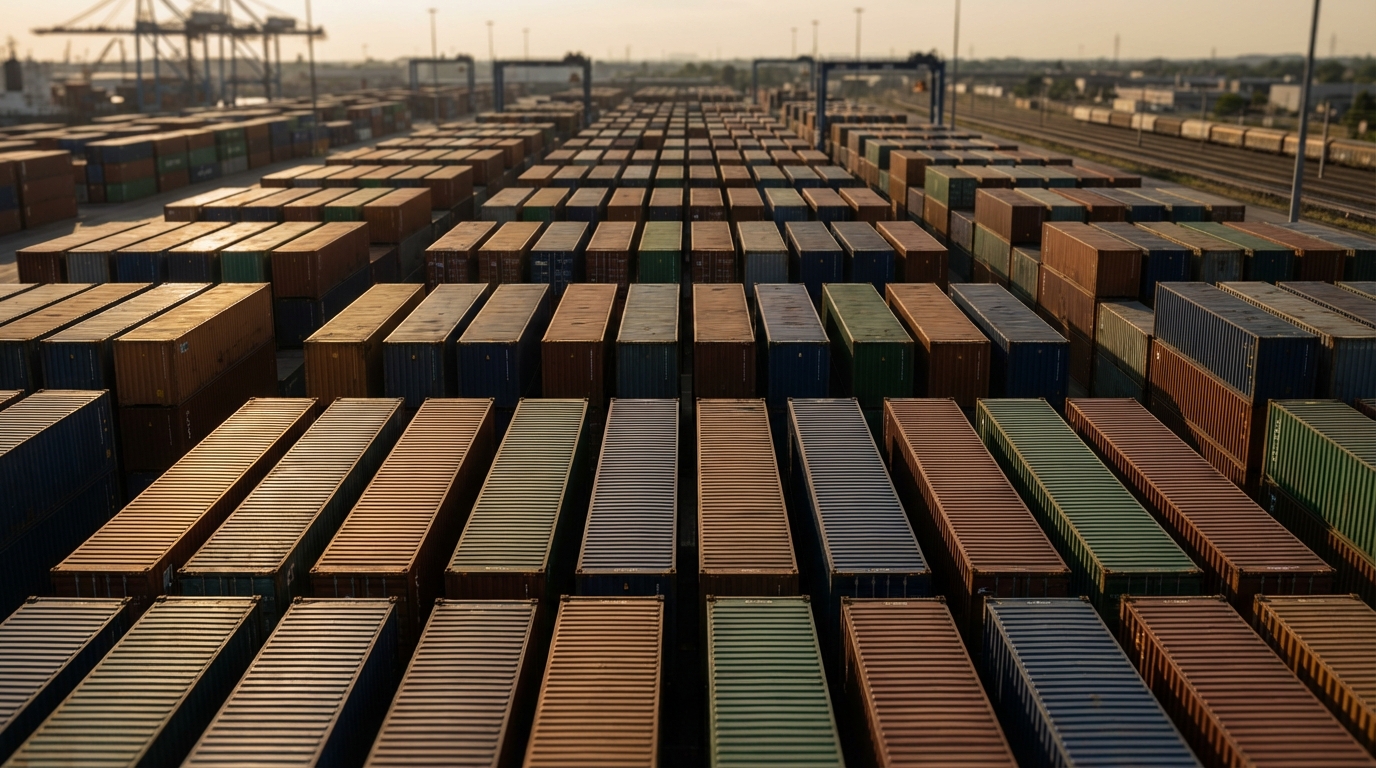
Illinois doesn’t have a deepwater seaport, but don’t let that fool you. The state is one of the largest import destinations in America — and Chicago-area importers paid billions in IEEPA tariffs on goods that entered through ports across the country before flowing into the Midwest distribution network.
Estimated IEEPA exposure for Illinois-based importers: $8-12 billion during the tariff period. That’s a combination of goods entering through the Port of Chicago on Lake Michigan, O’Hare’s massive air cargo operation, and — critically — the enormous volume of containerized cargo that enters through coastal ports and is transported to Chicago by rail and truck.
The Supreme Court’s decision means all of those IEEPA surcharges are recoverable. But Illinois importers face a unique challenge: your entries may be scattered across half a dozen port districts from coast to coast. Here’s how to handle that.
Illinois’s Import Economy: Hub of the Heartland
Chicago has been the freight capital of America since the railroad era, and that hasn’t changed. The city’s central location, intermodal rail connections, and massive distribution infrastructure make it the natural landing point for imported goods destined for the entire Midwest. But “imports” for Illinois businesses come in through a variety of channels.
How Illinois imports enter the U.S.:
| Entry Channel | Share of IL Imports | Common Port Districts |
|---|---|---|
| West Coast sea (rail to Chicago) | ~40% | LA/Long Beach (2704), Seattle/Tacoma (3001) |
| East Coast sea (rail to Chicago) | ~20% | NY/NJ (4601), Savannah (1703) |
| O’Hare air cargo | ~18% | Chicago (3901) |
| Gulf Coast sea (rail to Chicago) | ~10% | Houston (5301) |
| Canada land border | ~8% | Detroit (3802), Buffalo (0901) |
| Port of Chicago (Lake Michigan) | ~4% | Chicago (3901) |
This multi-port entry profile is what makes Illinois IEEPA recovery both complex and valuable. Your entries aren’t concentrated in one port district — they’re spread across the entire national port system. That means you need a comprehensive approach to capture every refundable dollar.
The Intermodal Factor
Here’s something many Illinois importers don’t realize: the IEEPA tariff was assessed at the first port of entry, not at the final destination. If your goods entered through the Port of Los Angeles and were railed to Chicago, the IEEPA duty was paid at LA. Your refund claim is filed with LA’s CBP district, not Chicago’s.
This matters because you need to track where each entry was processed, not just where you received the goods. Your customs broker should have this information, but if you use multiple brokers for different trade lanes, you’ll need to coordinate across all of them.
Top import industries for Illinois:
| Industry | Estimated Annual Import Value | IEEPA Exposure |
|---|---|---|
| Industrial Machinery | $18 billion | $3.6-$6.1 billion |
| Consumer Electronics | $12 billion | $2.4-$4.1 billion |
| Auto Parts & Vehicles | $10 billion | $2.0-$3.4 billion |
| Pharmaceuticals & Chemicals | $8 billion | $1.6-$2.7 billion |
| Food & Agricultural Products | $6 billion | $1.2-$2.0 billion |
| Metals & Metal Products | $5 billion | $1.0-$1.7 billion |
Key Entry Points for Illinois Importers
O’Hare International Airport (District 3901)
O’Hare is the second-busiest air cargo airport in the United States, handling over 1.7 million tons of international air freight annually. For Illinois importers, O’Hare is the primary direct-entry point — goods that land at O’Hare were assessed IEEPA duties by Chicago’s CBP district.
IEEPA considerations for O’Hare entries:
- High-value electronics, pharma, and industrial components from China and other targeted countries
- Air cargo entries liquidate faster than sea entries — check your protest window deadlines
- O’Hare entries are relatively straightforward to identify and claim since they’re all in District 3901
Port of Chicago (District 3901)
The Port of Chicago on Lake Michigan handles bulk commodities and some containerized cargo via the St. Lawrence Seaway. Volume is modest compared to coastal ports, but steel, industrial materials, and specialty goods from overseas do enter through Chicago directly.
Coastal Ports (Indirect Entry)
The majority of Illinois-destined containerized imports enter through coastal ports and travel to Chicago by rail. These entries are filed with the coastal port’s CBP district. For Illinois importers, the most common coastal entry ports are:
- Los Angeles / Long Beach: The largest share of Chinese consumer goods destined for Midwest distribution
- New York / Newark: East Coast imports, especially fashion, food, and pharmaceuticals
- Savannah: Growing share of Asian imports on the all-water Panama Canal route
- Houston: Gulf Coast industrial and petrochemical imports
Your refund claims for these entries are filed with each respective port district. This is where the complexity comes in for Illinois importers. See how to file your IEEPA tariff refund for the step-by-step process.
Recovery Strategy for Midwest Importers
Step 1: Map Every Entry Across All Ports
The single most important step for Illinois importers is building a complete picture of your entry portfolio. Pull your ACE data for the entire IEEPA period (February 4, 2025 through February 24, 2026) and organize entries by port district. Many Illinois importers are surprised to discover entries in port districts they didn’t expect — especially if freight forwarders or 3PLs made routing decisions independently.
Step 2: Coordinate Across Brokers
If you use different customs brokers for different trade lanes (which is common for larger Midwest importers), you need each broker to pull their respective entries. Don’t assume one broker has the full picture. A comprehensive impact assessment consolidates data from all brokers into a single analysis.
Step 3: Prioritize by Deadline
Your entries across different ports will have different liquidation dates, which means different protest deadline timelines. Prioritize the entries closest to their 180-day protest window expiration. For most Illinois importers, the oldest entries (February-April 2025) that entered through fast-liquidating ports like O’Hare or land border crossings will have the earliest deadlines.
Step 4: Choose Recovery Paths by Entry
Different entries will qualify for different recovery paths:
- Unliquidated entries (generally from mid-2025 onward): Post-summary correction
- Recently liquidated entries (within 180-day window): Formal protest
- Older liquidated entries (past 180-day window): CIT litigation
- Any entries (if you want immediate capital): Claim assignment
Illinois importers with multi-port entry profiles often end up using multiple recovery paths simultaneously. That’s normal — it’s actually the optimal approach for maximizing total recovery.
Get your free Impact Assessment →
Industry-Specific Guidance for Illinois
Manufacturing and Industrial Importers
Chicago and the broader Illinois/Indiana/Wisconsin manufacturing corridor imports enormous volumes of industrial machinery, components, raw materials, and equipment from China and other targeted countries. These imports often enter through multiple ports depending on weight, urgency, and supplier routing.
Industrial importers should pay particular attention to HTS chapters 84 and 85 (machinery and electrical equipment), which are among the highest-value IEEPA-impacted categories. A single industrial machine imported from China could carry $20,000-$100,000 in IEEPA surcharges depending on declared value.
Food and Agricultural Importers
Chicago is a national hub for food distribution, and Illinois-based food importers source from around the world. Chinese specialty foods, Mexican produce, and agricultural products from multiple IEEPA-targeted countries all carried surcharges. The food industry’s thin margins make IEEPA recovery particularly impactful — these refunds go straight to the bottom line.
Automotive Supply Chain
Illinois’s auto industry — from assembly plants to parts distributors — imports significant volumes from Mexico, Canada, and China. The IEEPA fentanyl tariffs on Mexican and Canadian auto parts hit Illinois’s automotive supply chain hard. If you’re part of this chain, your refund potential is substantial and spans multiple country-specific tariff rates.
Retail and Consumer Goods Distributors
Chicago’s position as a national distribution hub means many of the country’s largest retailers and consumer goods distributors are headquartered or operate major facilities in Illinois. These companies import massive volumes of Chinese consumer goods — electronics, apparel, home goods, toys — through coastal ports and rail them to Midwest distribution centers.
If you operate a distribution business in Illinois, your IEEPA exposure is likely concentrated in the highest-rate tariff categories (20-34% on Chinese goods). Calculate your total using the refund amount calculator.
The 3PL and Importer of Record Challenge
Illinois importers frequently use third-party logistics providers (3PLs) for their supply chain operations, and this creates a specific complication for IEEPA recovery that’s worth understanding in detail.
Who Holds the Refund Rights?
The IEEPA refund belongs to the importer of record on the entry summary — not the consignee, not the freight forwarder, and not the 3PL. If you are the importer of record, the refund is yours. If your 3PL or buying agent is the importer of record, they hold the refund rights unless your contract assigns them to you.
Many Illinois-based distributors and retailers use 3PLs that handle everything from ocean booking to customs clearance. In some of these arrangements, the 3PL is named as the importer of record for operational convenience. If that’s your situation, review your contract to determine who has rights to duty refunds. This is a negotiable point, and some 3PL contracts explicitly address duty refund allocation.
Multi-3PL Operations
Larger Illinois importers may use different 3PLs for different trade lanes — one for China-origin goods coming through LA, another for Canadian goods crossing at Detroit, and perhaps a third for European imports through East Coast ports. Each 3PL may use a different customs broker, creating a fragmented data picture.
To build a complete IEEPA recovery claim, you need to consolidate entry data from every 3PL and every broker. This is one of the most common gaps in IEEPA recovery: importers capture their direct-import entries but miss the entries handled by 3PLs, buying offices, or overseas agents.
The Consolidation Solution
A professional impact assessment solves the consolidation challenge by pulling data from ACE directly, which captures all entries where your company is the importer of record — regardless of which broker, 3PL, or forwarder handled the filing. This is the most reliable way to ensure nothing is missed.
Timing Pressure for Illinois
Because Illinois importers’ entries are spread across multiple port districts, the 180-day protest window deadlines don’t fall on a single date — they’re scattered across a range depending on which port processed the entry and when it liquidated. This creates a rolling deadline situation where you need to continuously monitor for approaching expiration dates. Filing early and comprehensively eliminates this risk.
Calculating Your Illinois IEEPA Refund
Important note for Illinois importers: Don’t just look at entries processed by Chicago’s CBP district. You need to capture entries from every port district where your goods entered the country.
- Pull your full ACE data across all port districts for the IEEPA period
- Contact every customs broker you used during the period — including any used by freight forwarders or 3PLs
- Identify all 9903-series HTS codes on your entries
- Sum IEEPA duties by port district and by liquidation status
- Map recovery paths for each entry based on status and deadline proximity
Estimated refund ranges for Illinois importers:
| Importer Profile | Annual Import Value | Estimated IEEPA Refund |
|---|---|---|
| Small specialty importer | $2M-$10M | $200K-$1.5M |
| Mid-size distributor | $10M-$50M | $1.5M-$8M |
| Large industrial/manufacturing | $50M-$200M | $6M-$30M |
| National retailer (IL-based) | $200M+ | $25M+ |
Frequently Asked Questions for Illinois Importers
My goods entered through the Port of LA but I’m in Chicago. Who handles my refund claim?
Your refund claim is filed with the CBP port district where the entry was originally processed. For goods that entered through LA, that’s District 2704. Your customs broker handles the electronic filing through ACE regardless of where they (or you) are physically located. The key is having the original entry data — your broker should have this.
I use a 3PL that handles all my importing. Do I still have an IEEPA refund claim?
It depends on who is the importer of record on the entry summaries. If you are the importer of record, the refund rights belong to you, not the 3PL. If the 3PL is the importer of record (which happens in some logistics arrangements), they hold the refund rights unless your contract assigns them to you. Check your logistics agreements and your entry summaries to clarify.
I import Canadian goods through Detroit. Are those covered by IEEPA refunds?
Yes. Canadian-origin goods subject to the IEEPA fentanyl tariffs (25% surcharge) are eligible for refunds. Many Illinois manufacturers import materials and components from Canada through the Detroit border crossing. See our Detroit and Buffalo border crossing guide for details specific to Canadian imports.
The Chicago Distribution Advantage
Despite the complexity of multi-port recovery, Illinois importers have a structural advantage: Chicago’s position as the nation’s freight hub means the city has deep customs broker expertise and logistics infrastructure that supports efficient IEEPA recovery.
Broker Expertise
Chicago-based customs brokers handle entries from every major port in the country because Illinois importers use every major port. This gives Chicago brokers a breadth of experience with different CBP districts, different processing timelines, and different commodity types that’s hard to match in more regionally focused broker markets.
When selecting a broker for IEEPA recovery, Chicago importers should look for one with demonstrated experience filing claims across multiple port districts. The multi-port nature of Illinois importing is your biggest complexity — and your broker’s ability to manage that complexity is your biggest asset.
The Intermodal Data Advantage
Chicago’s intermodal freight infrastructure generates detailed tracking data as containers move from coastal ports to inland destinations. This data can supplement your ACE records in verifying which entries correspond to which shipments, particularly useful if you’re trying to reconcile broker records with warehouse receiving records across multiple trade lanes.
Take Action Now
Illinois importers face unique complexity because your entries are spread across multiple port districts nationwide. That complexity makes professional guidance essential — and it makes early action critical, because you need to identify and prioritize entries approaching their protest deadlines across every port where you import.
Get your free Impact Assessment at tariffresolution.com/assessment. We specialize in multi-port recovery for Midwest importers. Our team will consolidate your entry data from every port district — LA, NY, Savannah, Houston, Chicago O’Hare, Detroit, and any other districts where you have entries — calculate your total IEEPA refund across the full national port network, and build a prioritized recovery plan that ensures no entry falls through the cracks and no deadline is missed. Illinois importers deserve specialized expertise that matches the complexity of their multi-port operations. Free to start, no obligation, and the payoff is real.