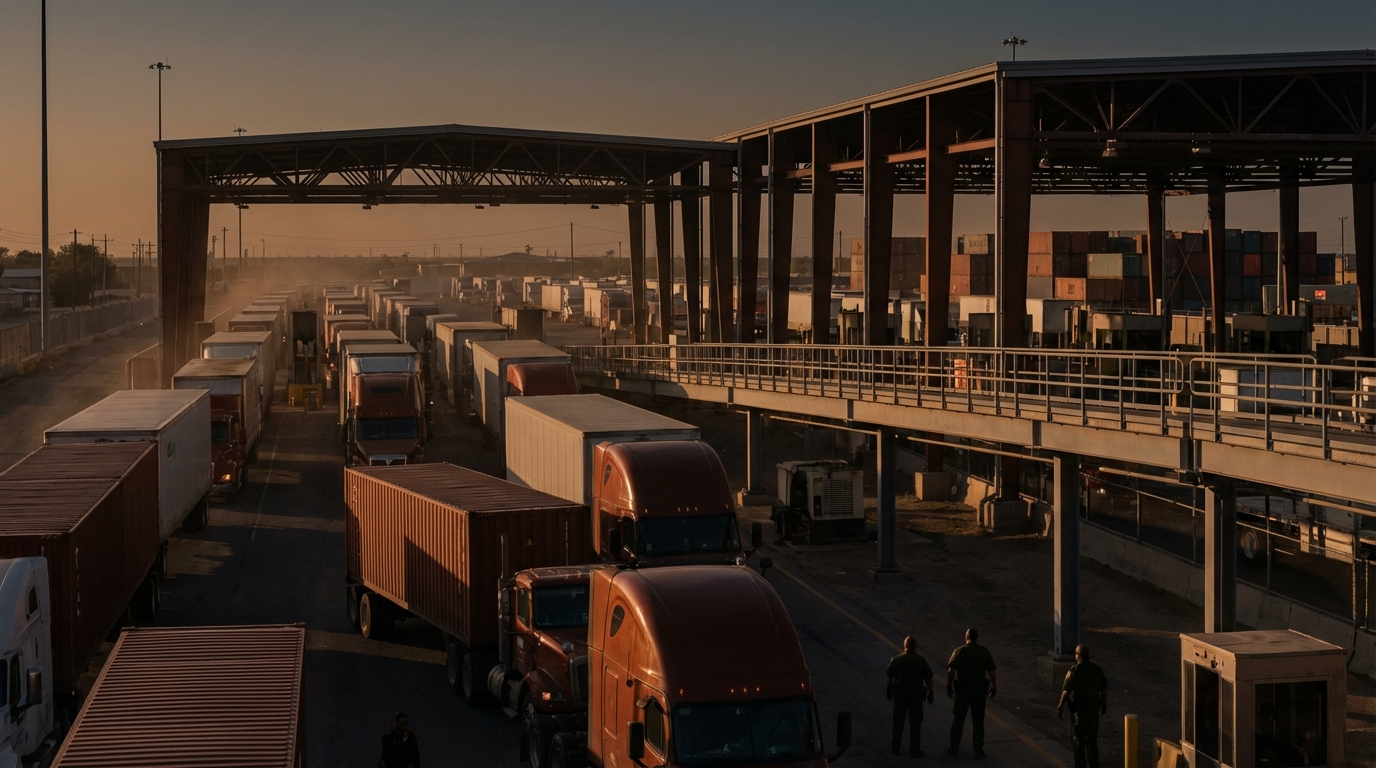
The Southeast has been the fastest-growing port region in America for the past decade, and that growth came with a cost during the IEEPA tariff period. Savannah, Charleston, and Norfolk have been absorbing an ever-larger share of U.S. imports — especially from China via the all-water Panama Canal route — and every one of those shipments carried IEEPA surcharges that are now refundable.
Estimated IEEPA exposure for Southeast importers: $14-18 billion across the tariff period. The Port of Savannah alone, which has rocketed to become the third-busiest container port in the U.S., accounts for a significant share of that total. Add Charleston, Norfolk, Jacksonville, and the region’s growing air cargo operations, and you’re looking at one of the most IEEPA-impacted regions in the country.
Here’s your guide to recovering those duties.
The Southeast Import Boom and IEEPA Impact
The Southeast’s rise as an import powerhouse has been driven by several converging factors: lower labor costs than the Northeast, abundant warehouse space, the Panama Canal expansion enabling all-water Asian services to the East Coast, and massive population growth creating local consumer demand.
All of these factors that drove growth also drove IEEPA exposure. More imports from targeted countries means more tariff surcharges paid.
Top import industries through Southeast ports:
| Industry | Annual Import Value | Primary Origins | IEEPA Rate |
|---|---|---|---|
| Furniture & Home Goods | $16 billion | China, Vietnam | 20-34% |
| Consumer Electronics | $12 billion | China, South Korea | 20-34% |
| Auto Parts & Vehicles | $10 billion | China, Mexico, Germany | 20-25% |
| Apparel & Textiles | $8 billion | China, Vietnam, Bangladesh | 20-34% |
| Building Materials | $6 billion | China, multiple origins | 20-34% |
| Plastics & Chemicals | $5 billion | China, multiple origins | 20-25% |
The Furniture Factor
The Southeast — particularly North Carolina, Georgia, and the Carolinas — is the center of America’s furniture industry. And an enormous share of that furniture is imported from China. High Point, North Carolina, the “Furniture Capital of the World,” relies on a supply chain that brings Chinese-manufactured and Vietnamese-manufactured furniture through Savannah, Charleston, and Norfolk.
Furniture imports carry some of the highest per-container IEEPA surcharges because the goods are bulky but relatively high-value. A single container of Chinese furniture worth $80,000-$150,000 generated $16,000-$51,000 in IEEPA duties. For furniture importers moving dozens of containers monthly, the annual IEEPA exposure easily reached millions.
These duties are now fully recoverable. See the complete guide to IEEPA tariff refunds for the legal foundation.
The E-Commerce Distribution Shift
The Southeast has become a major hub for e-commerce distribution centers. Amazon, Walmart, and dozens of other retailers have built massive fulfillment operations across Georgia, the Carolinas, Tennessee, and Virginia. These operations are fed by imports through Southeast ports — imports that carried IEEPA surcharges.
If you import goods for e-commerce fulfillment through Southeast ports, your IEEPA refund could be substantial. Even if individual shipments were moderate in value, the high volume of e-commerce imports means the cumulative total adds up quickly.
Key Southeast Ports of Entry
Port of Savannah (District 1703)
Savannah has been the breakout story in American port logistics. Georgia Ports Authority’s Garden City Terminal is now the third-busiest container port in the U.S., handling over 5.8 million TEUs annually. Savannah’s growth has been fueled by the Panama Canal expansion, extensive inland rail connections, and Georgia’s business-friendly environment.
IEEPA considerations for Savannah importers:
- Massive volume of Chinese consumer goods via the all-water Panama Canal route
- Furniture, home goods, and building materials are dominant import categories
- Savannah’s rapid growth means newer importers may not have established refund processes
- CBP District 1703 will face significant processing volume for IEEPA claims
- The port’s inland port network (Appalachian Regional Port, Northeast Georgia Inland Port) means your goods may have entered at Savannah but distributed across the Southeast
For a detailed port-specific analysis, see our Port of Savannah IEEPA recovery guide.
Port of Charleston (District 1601)
Charleston handles approximately 2.7 million TEUs and serves as a primary gateway for the automotive, tire, and manufacturing sectors in the Carolinas. BMW, Volvo, Michelin, and dozens of their suppliers use Charleston for import/export operations.
Key considerations:
- Automotive and tire imports are major IEEPA-exposed categories
- Charleston’s dual-terminal operation (Wando Welch and Hugh K. Leatherman terminals) processes high-value industrial cargo
- The port serves a broad inland territory including Tennessee, Alabama, and western North Carolina
Port of Virginia / Norfolk (District 1401)
Norfolk is the deepest natural harbor on the East Coast and handles approximately 3.7 million TEUs through terminals at Norfolk International Terminals, Virginia International Gateway, and Newport News Marine Terminal.
Key considerations:
- Military and government supply chain imports through Norfolk may have unique IEEPA considerations
- Coal exports are the port’s signature, but container imports of consumer goods from Asia are growing rapidly
- Norfolk serves the entire Mid-Atlantic and Southeast Virginia market
Other Southeast Entry Points
- Jacksonville (JAXPORT): Major vehicle import port plus growing container operations
- Wilmington, NC: Specialized in bulk and breakbulk with growing container service
- Mobile, Alabama: Steel and manufacturing imports for the Gulf Coast manufacturing sector
- Memphis (air cargo): FedEx’s global hub processes massive air freight volumes, including IEEPA-dutiable goods from Asia
Recovery Strategy for Southeast Importers
The New Importer Challenge
One unique aspect of Southeast IEEPA recovery is that many importers in the region are relatively new to the import process. The Southeast’s growth as a distribution hub has attracted companies that previously imported through Northeast or West Coast ports. These companies may not have deep customs compliance experience and may need more guidance navigating the four recovery paths.
If you’re a newer importer who started routing through Savannah or Charleston in the last few years, don’t let unfamiliarity with the process stop you from claiming your refund. The process is well-defined, and professional help is available.
Port-Specific Liquidation Timelines
Each Southeast port district has its own entry processing rhythm. Generally, Savannah’s high volume means slightly longer processing times, while Charleston and Norfolk may process entries somewhat faster. These differences affect your liquidation dates and, consequently, your protest window deadlines.
Pull your ACE data and check liquidation status for every entry from the IEEPA period. For entries that have already liquidated, calculate your remaining protest window time and prioritize accordingly.
The Inland Port Complication
Savannah’s inland port network (and similar programs at Charleston and Norfolk) allows importers to clear customs at inland facilities rather than at the seaport. If your entries were processed through an inland port facility, they should still be filed under the parent port’s CBP district. Verify this with your broker — it’s important for ensuring your refund claims are filed with the correct district.
Get your free Impact Assessment →
Industry-Specific Guidance
Furniture and Home Goods Importers
This is the big one for the Southeast. If you import furniture from China or Vietnam through Savannah, Charleston, or Norfolk, your IEEPA refund is likely among the largest in your industry. Chinese furniture imports carried the full 20-34% surcharge, and Vietnamese furniture may have been subject to additional IEEPA rates depending on classification.
Rough estimate: A mid-size furniture importer bringing in $20M-$50M annually through Southeast ports could be looking at $3M-$12M in recoverable IEEPA duties. Run the exact numbers using the refund amount calculator.
Automotive Supply Chain
The Southeast auto industry — BMW in Spartanburg, Volvo in Ridgeville, Mercedes in Tuscaloosa, plus the entire tier 1/2 supplier network — imports heavily through Charleston and Savannah. Auto parts from China and Mexico carried significant IEEPA surcharges. If you’re part of this supply chain, check your country-specific tariff exposure.
Building Materials and Construction
The Southeast’s construction boom during the IEEPA period meant high demand for imported building materials — and high IEEPA tariff bills. Chinese-origin flooring, fixtures, hardware, stone, tile, and other construction materials all carried surcharges. If you supply the construction industry with imported materials, these refunds can meaningfully impact your profitability.
Tire and Rubber Products
The Carolinas are a hub for tire manufacturing, and tire companies import raw materials and finished products from IEEPA-targeted countries. If you import through Charleston’s tire-heavy port operations, your IEEPA exposure is likely concentrated but high-value.
The Southeast Distribution Center Boom
The Southeast’s rapid growth as a distribution hub creates a unique IEEPA recovery dynamic. Understanding the relationship between port growth, distribution center expansion, and tariff exposure helps you contextualize your own refund opportunity.
Why Distribution Centers Followed the Ports
As Savannah, Charleston, and Norfolk grew their container volumes, logistics companies and retailers followed — building distribution centers in Georgia, South Carolina, North Carolina, Tennessee, and Virginia to be close to the import source. This created a virtuous cycle: more distribution capacity attracted more import volume, which attracted more distribution capacity.
During the IEEPA period, this meant an ever-growing volume of tariffed imports flowing into Southeast distribution centers. Companies that expanded their Southeast import operations during 2025 may have higher IEEPA exposure than they initially estimate, because the growth trajectory meant later months had higher volumes than earlier months.
The Inland Logistics Network
Savannah’s inland port network and Charleston’s inland port in Dillon, SC, extended the reach of Southeast ports into areas that traditionally sourced from other gateways. If you shifted import routing to use Southeast ports and their inland facilities during the IEEPA period, those entries — even if relatively recent — are fully eligible for refunds.
The inland logistics network also means your goods may have been processed at the inland facility rather than the seaport terminal. Verify with your broker that inland port entries are being captured in your IEEPA recovery analysis. They should be under the parent port’s CBP district, but it’s worth confirming.
Air Cargo: Don’t Forget Atlanta
Atlanta’s Hartsfield-Jackson Airport is one of the busiest air cargo hubs in the Southeast, handling international freight including goods from IEEPA-targeted countries. If you receive air cargo through Atlanta, those entries are processed by a different CBP district than Savannah or Charleston. Make sure your recovery plan includes air cargo entries alongside your sea freight claims.
Memphis, home to FedEx’s global hub, is another major Southeast air cargo gateway. Express shipments from China and other targeted origins that entered through Memphis carried IEEPA surcharges on every formal entry. High-frequency express importers can accumulate significant refundable totals across the tariff period.
The Southeast’s Future and Your Refund
The Southeast port region is not slowing down. Savannah’s continued expansion, Charleston’s new Leatherman terminal, and Norfolk’s deepwater advantage all point to continued growth. Your IEEPA refund from the 2025-2026 tariff period can be reinvested into this growth — whether that means expanding your import operations, building inventory, or strengthening your cash position for future trade disruptions.
Calculating Your Southeast IEEPA Refund
- Pull ACE data for all entries through Southeast port districts (1703 Savannah, 1601 Charleston, 1401 Norfolk, and others)
- Include inland port entries if you use Savannah’s or Charleston’s inland port network
- Don’t forget air cargo through Atlanta (Hartsfield-Jackson handles significant international air freight) and Memphis
- Filter for 9903-series HTS codes — these are the IEEPA tariff lines
- Sum duties and categorize by liquidation status for recovery path assignment
Estimated refund ranges for Southeast importers:
| Importer Profile | Annual Import Value | Estimated IEEPA Refund |
|---|---|---|
| Small/mid furniture importer | $5M-$25M | $800K-$5M |
| Consumer goods distributor | $10M-$50M | $1.5M-$10M |
| Automotive tier supplier | $15M-$60M | $2M-$10M |
| Large multi-category operation | $60M-$200M | $8M-$30M |
Frequently Asked Questions for Southeast Importers
My goods enter through Savannah but I’m based in Tennessee. Does that affect my claim?
Not at all. Your refund claim is based on where the entry was processed by CBP (Savannah, District 1703), not where you’re located. Your customs broker files the claim electronically through ACE. Many Southeast importers are headquartered in states other than Georgia, South Carolina, or Virginia — what matters is the port of entry.
I started importing through Savannah in mid-2025, switching from LA. Are my Savannah entries eligible?
Yes. Any entry processed during the IEEPA tariff period (February 4, 2025 through February 24, 2026) at any U.S. port of entry is eligible for a refund if IEEPA surcharges were assessed. Your Savannah entries are eligible, and your earlier LA entries are also eligible — but you’ll need to file with each port district separately. An impact assessment captures entries across all ports.
How long will refund processing take at Savannah given the port’s volume?
Processing times will depend on CBP staffing and the volume of claims filed. Savannah’s rapid growth means CBP District 1703 may face proportionally more claims than some other districts. Post-summary corrections should be faster (days to weeks), while protests typically take 18-36 months. Filing early gives you the best position in the processing queue. Learn more about the IEEPA refund timeline.
Filing Urgency for Southeast Importers
The Early Mover Advantage at Growing Ports
Savannah, Charleston, and Norfolk are all growing rapidly — which means their importer bases are growing too. When IEEPA recovery claims start flowing in, these growing districts will face increasing workloads. Importers who file early secure their position in the processing queue before the rush.
Protest Window Monitoring
With entries potentially spread across three or four Southeast port districts, you need systematic monitoring of liquidation dates and protest windows. Each district liquidates entries on its own timeline, creating a scattered deadline landscape. An impact assessment provides a complete timeline view so nothing slips through the cracks.
The Regional Economic Impact
The Southeast’s IEEPA refund recovery will inject billions of dollars back into one of the fastest-growing economic regions in the country. For individual importers, these refunds can fund expansion, inventory, hiring, and investment in the growth that Southeast ports are enabling. Don’t let administrative inertia delay your share of that capital recovery.
Take Action Now
The Southeast is the fastest-growing import region in America — which means it’s also one of the fastest-growing concentrations of recoverable IEEPA duties. Whether you import furniture through Savannah, auto parts through Charleston, or consumer electronics through Norfolk, your refund is real and substantial.
Get your free Impact Assessment at tariffresolution.com/assessment. We’ll analyze every entry across your Southeast port portfolio, calculate your total IEEPA refund, and build a recovery plan optimized for your specific situation. Free to start, and you’ll know exactly where you stand within days. The money is yours — let’s go get it.