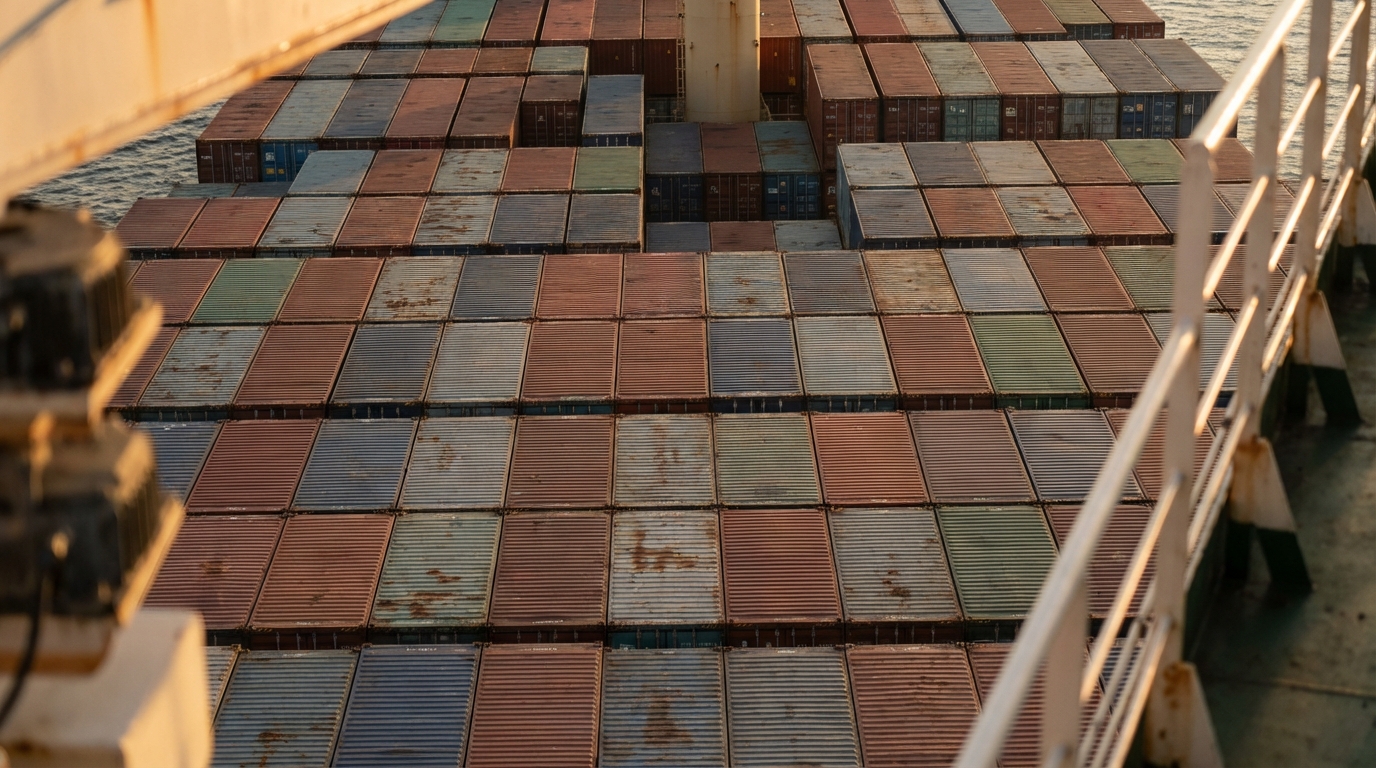
The Pacific Northwest is America’s northern gateway to Asia. The ports of Seattle, Tacoma, and Portland together handle a critical share of trans-Pacific trade — and that trade got hammered by IEEPA tariffs on Chinese, Vietnamese, and other Asian-origin goods. Now that the Supreme Court has struck those tariffs down, Pacific Northwest importers have a clear path to recovering every dollar they overpaid.
Estimated IEEPA exposure for Pacific Northwest importers: $6-9 billion during the tariff period. That’s a combination of containerized cargo through the Northwest Seaport Alliance (Seattle/Tacoma), bulk and breakbulk through Portland, and Canadian cross-border trade flowing through Blaine and other Washington border crossings.
The Pacific Northwest’s IEEPA recovery story has two chapters: the Asian import corridor and the Canadian border corridor. Both matter, and both are fully refundable.
Pacific Northwest Trade Profile
The Asian Import Corridor
Seattle and Tacoma sit on the Great Circle Route — the shortest shipping path between the Pacific Rim and North America. This geographic advantage means the Northwest Seaport Alliance (NWSA) is the first U.S. port of call for many Asian shipping services, handling cargo destined for both the regional market and inland destinations reached by BNSF and Union Pacific rail.
Top import industries through Pacific Northwest ports:
| Industry | Annual Import Value | Primary Origins | IEEPA Rate |
|---|---|---|---|
| Consumer Electronics | $8 billion | China, South Korea, Taiwan | 20-34% |
| Industrial Machinery | $6 billion | China, Japan, South Korea | 20-25% |
| Furniture & Home Goods | $4 billion | China, Vietnam | 20-34% |
| Apparel & Footwear | $3.5 billion | China, Vietnam, Cambodia | 20-34% |
| Agricultural Equipment | $2 billion | China, multiple origins | 20-25% |
| Seafood & Food Products | $1.8 billion | China, Canada, multiple | 20-25% |
The NWSA’s import mix is heavily weighted toward Chinese and broader Asian origins — exactly the trade lanes most impacted by IEEPA tariffs. For Pacific Northwest importers, the average IEEPA surcharge rate across their portfolio tends to be on the higher end (closer to 25-30%) because of this Asian concentration.
The Canadian Border Corridor
Washington state shares the longest stretch of the U.S.-Canada border in the lower 48, and the trade flowing across it is substantial. The Blaine/Pacific Highway crossing, the Sumas crossing, and several smaller ports of entry process billions in Canadian goods annually — all of which were subject to the 25% IEEPA fentanyl tariff.
Canadian cross-border imports through Washington include:
- Lumber and wood products — a massive category given the Pacific Northwest’s forestry industry
- Energy products — natural gas and petroleum from British Columbia and Alberta
- Agricultural products — grains, canola, specialty crops
- Manufactured goods — auto parts, aerospace components, industrial materials
- Seafood — wild-caught and farmed fish from British Columbia
Oregon’s portion of Canadian border trade is smaller but still significant, primarily flowing through the Portland metro area’s distribution network.
Key Pacific Northwest Ports of Entry
Northwest Seaport Alliance — Seattle/Tacoma (District 3001)
The NWSA is a partnership between the ports of Seattle and Tacoma, operating as a unified container gateway. Combined, the alliance handles approximately 3.5 million TEUs annually, making it the fourth-largest container port complex in the U.S.
IEEPA considerations:
- First port of call for many trans-Pacific services means high concentration of Chinese imports
- The alliance’s container terminals at T-5 (Seattle), T-18 (Seattle), T-30 (Seattle), and Husky Terminal (Tacoma) all process IEEPA-dutiable entries
- Significant volume of imports destined for inland markets (railed to Chicago, Minneapolis, etc.) — those entries are still filed with District 3001
- The tech industry’s supply chain (Amazon, Microsoft, other PNW tech companies) drives high-value electronics imports through these terminals
Port of Portland (District 2904)
Portland’s marine terminals handle bulk, breakbulk, and automotive cargo. While container volume is smaller than Seattle/Tacoma, Portland processes significant volumes of:
- Automobiles from Asian manufacturers
- Steel and metals from multiple IEEPA-targeted origins
- Heavy equipment and industrial machinery
Portland also handles grain exports, but on the import side, the IEEPA exposure is concentrated in high-value industrial goods.
Blaine/Pacific Highway (District 3004)
Washington’s busiest Canada border crossing processes both commercial truck traffic and rail shipments. If you import Canadian goods through Blaine, the 25% IEEPA fentanyl tariff was assessed on virtually everything, from lumber to manufactured components.
Key consideration: Canadian border entries tend to liquidate faster than sea entries because the CBP processing is more streamlined for land-border commercial traffic. Check your liquidation dates — early-period entries from February-April 2025 may already be approaching protest window deadlines.
Sea-Tac International Airport
Sea-Tac handles growing international air cargo volumes, including high-value tech components, pharmaceuticals, and express shipments from Asia. Air cargo entries carry higher per-shipment IEEPA duties because of the high-value goods involved.
Recovery Strategy for PNW Importers
The Tech Industry Connection
The Pacific Northwest is home to Amazon, Microsoft, Costco, Boeing, T-Mobile, Nordstrom, REI, and dozens of other major companies that import from IEEPA-targeted countries. While these giants have their own trade compliance teams and dedicated customs operations, the broader ecosystem of suppliers, distributors, and mid-market companies that support the tech and retail economy also imports heavily from Asia and was hit just as hard by the surcharges.
If you’re part of this ecosystem — whether you supply components to tech manufacturers, distribute consumer electronics, or import goods for Amazon Marketplace — your IEEPA refund is waiting. The complete guide to IEEPA tariff refunds covers every aspect of the recovery process.
Prioritizing Your Recovery
For Pacific Northwest importers, the recovery priority typically follows this pattern:
- Canadian border entries first — these liquidate fastest, so protest deadlines arrive earliest
- Air cargo entries second — also tend to liquidate quickly
- Sea cargo entries third — longer liquidation timelines give you more runway
Within each category, work from oldest to newest to ensure you don’t miss any 180-day protest windows.
The Lumber and Wood Products Question
Washington and Oregon importers bring in substantial volumes of Canadian lumber and wood products. The 25% IEEPA fentanyl tariff on these goods was devastating for builders, contractors, and lumber distributors — it added roughly $10,000-$15,000 per truckload of Canadian lumber.
These duties are fully refundable. If you import Canadian lumber through Washington border crossings, your refund claim could be among the most straightforward to file: clear country of origin, clear HTS classification, and clear IEEPA surcharge amounts. Your broker should be able to file post-summary corrections or protests quickly.
Get your free Impact Assessment →
Industry-Specific Guidance
Aerospace Importers
Boeing’s presence in the Pacific Northwest drives a massive aerospace import supply chain. Titanium from China, specialized alloys, avionics components, and interior materials from IEEPA-targeted countries all carried surcharges. Aerospace entries are often high-value with complex tariff classifications — work with a broker experienced in HTS Chapter 88 entries.
Seafood Industry
The Pacific Northwest seafood industry imports significant volumes from China (processed seafood), Canada (wild-caught fish), and other Asian origins. If you import seafood for processing or distribution, your IEEPA exposure includes both the fentanyl tariff on Canadian products and the standard IEEPA rates on Asian seafood.
Seafood entries, like other perishables, tend to liquidate faster than durable goods. Check your eligibility and filing status for older entries.
Agriculture and Wine
Washington is a major agricultural state, and while most agricultural trade is exports, there’s significant import of agricultural inputs — fertilizers, equipment, and processing materials — from IEEPA-targeted countries. Oregon’s wine industry imports bottles, corks, and equipment from multiple origins that may have carried IEEPA surcharges.
Retail and Consumer Goods
Costco is headquartered in Issaquah, Washington, and the broader retail sector in the Pacific Northwest imports massive consumer goods volumes from China. If you’re a retailer or consumer goods distributor importing through NWSA terminals, your IEEPA refund is likely substantial. Use the refund amount calculator to estimate your total.
Cross-Border Dynamics: The Canada Connection
Pacific Northwest IEEPA recovery isn’t just about Asian imports through seaports. Washington state’s extensive Canadian border means many PNW importers have a dual exposure — Asian goods through Seattle/Tacoma and Canadian goods through Blaine and other border crossings.
The British Columbia Trade Corridor
British Columbia is Washington state’s largest trading partner, and the trade flows across the border in massive volumes. Lumber, fish, energy products, manufactured goods, and agricultural products from BC entered through Blaine (District 3004), Sumas, Lynden, and other crossings — all carrying the 25% IEEPA fentanyl tariff.
For Pacific Northwest importers who source from both Asia and Canada, the combined IEEPA exposure can be much larger than either corridor alone. A lumber distributor importing Canadian wood products through Blaine and Chinese hardware through Seattle is recovering from two completely different tariff programs under the same IEEPA umbrella.
The Dual-Corridor Recovery Plan
If you import through both PNW seaports and Canadian border crossings, your recovery plan needs to address both corridors:
- Asian imports through NWSA (District 3001): China, Vietnam, and other Asian origins at 20-34% IEEPA rates
- Canadian imports through Blaine (District 3004): Canadian origins at 25% fentanyl tariff rate
- Potentially other crossings: Some PNW importers also use Sumas, Lynden, or Oroville crossings
Each district requires separate filings. Your customs broker may handle all of them, or you may use different brokers for sea and land entries. Make sure both corridors are captured in your impact assessment.
Oregon’s Position
Oregon importers typically enter goods through the Port of Portland (District 2904), through NWSA terminals in Washington, or through the Portland International Airport’s air cargo facilities. Oregon doesn’t share a border with Canada, so Oregon-based importers’ IEEPA exposure is primarily Asian imports. However, some Oregon businesses source Canadian materials that cross at Washington border points — those entries are still filed with the Washington border district.
The Cascadia Innovation Corridor
The Pacific Northwest’s tech and innovation economy stretches from Vancouver, BC, through Seattle to Portland. This “Cascadia” corridor drives unique cross-border trade patterns — tech components, research materials, and specialized equipment flow back and forth. Every northbound Canadian entry that carried the fentanyl tariff is refundable, even for relatively small, high-value R&D shipments.
Calculating Your Pacific Northwest IEEPA Refund
- Pull ACE data for all entries through Districts 3001 (Seattle/Tacoma), 2904 (Portland), 3004 (Blaine), and any other districts you use
- Don’t forget Canadian border entries — these are frequently overlooked but carry the 25% fentanyl tariff
- Include air cargo through Sea-Tac
- Filter for 9903-series HTS codes and sum associated duties
- Categorize by liquidation status and map recovery paths
Estimated refund ranges for Pacific Northwest importers:
| Importer Profile | Annual Import Value | Estimated IEEPA Refund |
|---|---|---|
| Small retailer/distributor | $2M-$10M | $250K-$1.5M |
| Mid-size tech/industrial importer | $10M-$50M | $1.5M-$8M |
| Lumber/wood products importer | $5M-$30M | $1.2M-$7.5M |
| Large PNW-based company | $50M-$200M | $8M-$30M |
Frequently Asked Questions for Pacific Northwest Importers
My goods arrive at Tacoma but are railed to my warehouse in Spokane. Does the final destination affect my refund?
No. The IEEPA tariff was assessed at the port of entry (Tacoma, District 3001), and your refund claim is filed with that district. Where the goods ultimately end up — whether Spokane, Portland, or Chicago — has no bearing on the claim. Your customs broker handles the filing based on the original entry data.
I import Canadian lumber. Is there a difference between the fentanyl tariff refund and other IEEPA refunds?
The legal basis is the same — the Supreme Court ruled all IEEPA tariffs unconstitutional, including the fentanyl-related tariffs on Canadian and Mexican goods. Your Canadian lumber imports that were assessed the 25% fentanyl tariff under IEEPA authority are fully eligible for refunds through the same recovery paths as Chinese-origin imports.
My company imports through both Seattle and the Port of LA. Do I need to file in both districts?
Yes. Entries processed by the NWSA (District 3001) are filed with Seattle/Tacoma CBP, and entries processed by LA/Long Beach (District 2704) are filed with LA CBP. Your broker can handle both electronically through ACE. Make sure you pull ACE data for all port districts where you have entries — many PNW importers also route some cargo through California ports and may not realize those entries need to be claimed separately.
Filing Best Practices for PNW Importers
Organize by Recovery Path First
Before filing anything, sort your entries into three buckets: unliquidated (PSC-eligible), liquidated within 180 days (protest-eligible), and liquidated beyond 180 days (CIT-eligible). This prevents wasted effort filing the wrong claim type for any given entry.
Use Your Broker’s ACE Access
Your customs broker has direct access to the ACE system where all your entry data lives. Request a comprehensive data pull for the IEEPA period across all port districts. If your broker is slow to respond, you can also access ACE directly through the CBP’s ACE Secure Data Portal — but the broker route is typically faster and more comprehensive.
Document Everything
Keep records of every filing — PSC submission confirmations, protest filing receipts, and any CBP correspondence. This documentation is essential if any claim is denied or if you need to escalate to the CIT. It’s also important for accounting purposes, as your CFO or controller will need to track the refund receivable on your balance sheet.
Consider Professional Help for Complex Portfolios
If you import through multiple PNW ports plus Canadian border crossings, or if you have entries with multi-program tariffs (IEEPA plus Section 301 or Section 232), a professional impact assessment is worth the investment. The complexity of multi-port, multi-program claims increases the risk of errors and missed entries when done manually.
Take Action Now
Pacific Northwest importers sit at the intersection of two major IEEPA-impacted trade corridors: trans-Pacific Asian trade and cross-border Canadian trade. Your refund potential spans both, and the combined total can be substantial.
Get your free Impact Assessment at tariffresolution.com/assessment. We’ll map every entry across all your Pacific Northwest ports and border crossings — NWSA terminals in Seattle and Tacoma, the Port of Portland, Blaine and other Canadian border crossings, Sea-Tac air cargo, and any other ports you use — calculate your total IEEPA refund from both Asian and Canadian trade corridors, and build a recovery plan that prioritizes the entries closest to their protest deadlines. No cost, no obligation — just clarity on what you’re owed and how to get it back. The Pacific Northwest’s trade with Asia and Canada generated billions in IEEPA surcharges. Your share is recoverable, and we’ll help you claim every dollar.