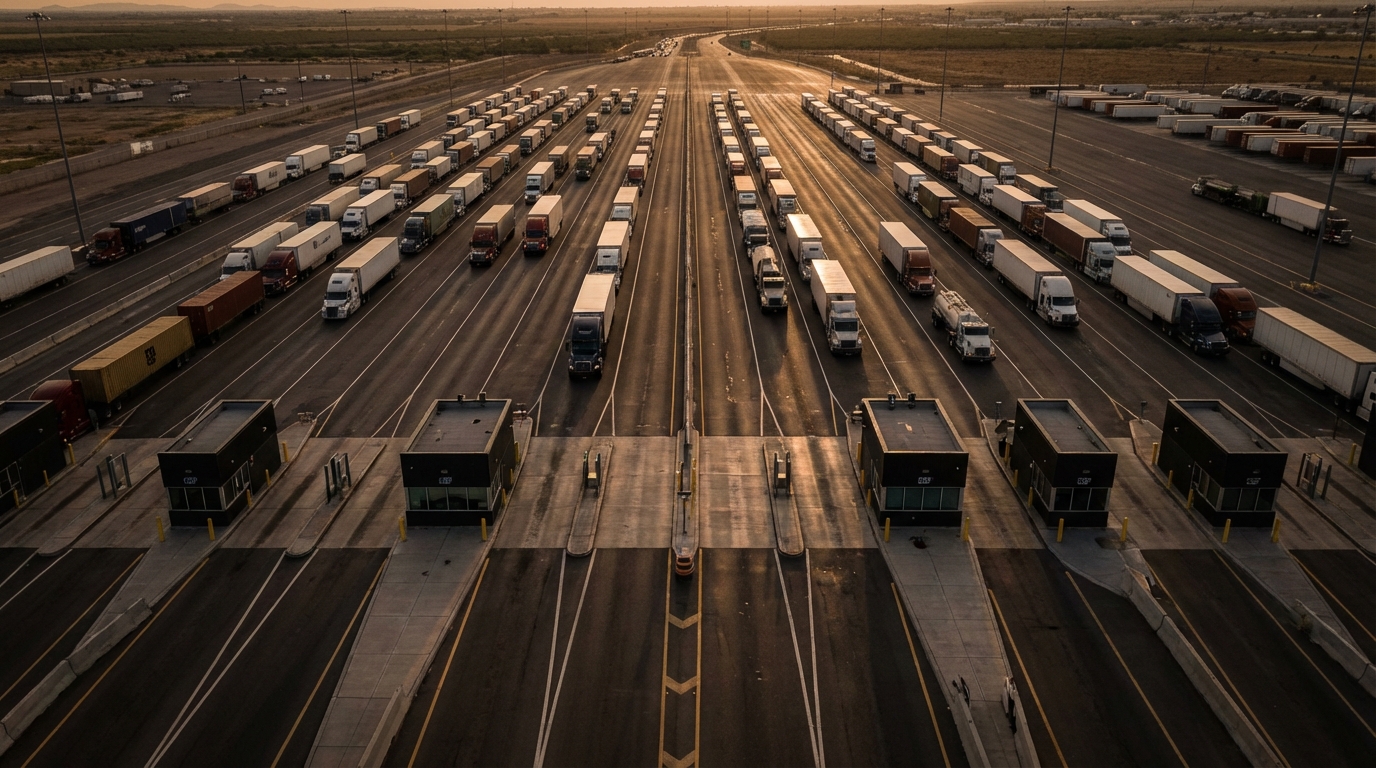
Food and agriculture importers operated under a double burden during the IEEPA tariff period: the normal pressure of perishable goods timelines combined with 20-25% tariff surcharges that compressed already-thin margins to the breaking point. Now that the Supreme Court has ruled those tariffs unconstitutional, the refund represents a genuine lifeline for an industry where net margins often run 2-5%.
The 6-3 ruling in Learning Resources, Inc. v. Trump on February 20, 2026, invalidated all IEEPA tariffs collected between February 4, 2025, and February 24, 2026. The CIT’s March 4 order directed CBP to process refunds through the CAPE system. For food importers — who often have the highest entry counts of any industry — the recovery process requires organization, urgency, and an understanding of the unique regulatory landscape you operate in.
This guide covers HTS codes, tariff rates, documentation requirements, and recovery strategies specific to food and agriculture importers.
Which Food and Agriculture Products Qualify
Food imports span more HTS chapters than any other industry. If you import from China, Canada, or Mexico, the list of affected products is extensive.
Key HTS Codes for Food and Agriculture Importers
| HTS Chapter | Product Category | Common Products | Typical IEEPA Rate |
|---|---|---|---|
| Chapter 2 | Meat and edible offal | Pork, poultry, beef cuts | 20-25% |
| Chapter 3 | Fish and seafood | Shrimp, tilapia, crab, salmon | 20-25% |
| Chapter 4 | Dairy products | Cheese, butter, milk powder | 20-25% |
| Chapter 7 | Vegetables | Tomatoes, peppers, avocados, onions | 20-25% |
| Chapter 8 | Fruit and nuts | Berries, citrus, tree nuts, dried fruit | 20-25% |
| Chapter 9 | Coffee, tea, spices | Green tea, spices, vanilla | 20-25% |
| Chapter 10 | Cereals | Rice, wheat, corn | 20-25% |
| Chapter 11 | Milling products | Flour, starch, malt | 20-25% |
| Chapter 12 | Oil seeds | Soybeans, sesame, flax | 20-25% |
| Chapter 15 | Fats and oils | Vegetable oils, olive oil | 20-25% |
| Chapter 16 | Prepared meat/fish | Canned tuna, processed meats | 20-25% |
| Chapter 17 | Sugars and confectionery | Sugar, candy, chocolate | 20-25% |
| Chapter 19 | Cereal preparations | Pasta, bread, pastries | 20-25% |
| Chapter 20 | Vegetable/fruit preparations | Canned fruits, juices, sauces | 20-25% |
| Chapter 21 | Miscellaneous food | Sauces, soups, seasonings | 20-25% |
| Chapter 22 | Beverages | Beer, wine, spirits, water | 20-25% |
| Chapter 23 | Food industry residues | Animal feed, pet food | 20-25% |
All of these fall under 9903.01 and 9903.02 IEEPA headings when imported from designated countries.
Country-Specific Exposure
Food imports are affected by all three IEEPA tariff regimes, and the country exposure varies dramatically by product category:
Mexico (25% IEEPA rate): Mexico is the largest source of U.S. food imports by value. Avocados, tomatoes, berries, peppers, beer, tequila, and a wide range of fresh produce. The IEEPA tariffs on Mexican food imports hit consumers and importers hardest because there are few alternative sources for winter produce.
Canada (25% IEEPA rate): The second-largest source. Canola oil, potatoes, maple syrup, pork, beef, dairy products, fish, and processed foods. The U.S.-Canada food trade is deeply integrated — many processing operations span the border.
China (20-34% IEEPA rate): Seafood (shrimp, tilapia, crab), garlic, apple juice concentrate, canned mushrooms, spices, tea, processed foods, and animal feed ingredients. China is also a major source of food packaging materials, which may have been separately subject to IEEPA tariffs.
The three-country total: A diversified food importer sourcing from all three countries could have paid IEEPA tariffs on virtually every shipment for an entire year. The aggregate refund can be staggering.
Estimating Your Food and Agriculture Refund
Food margins are famously thin. A 20-25% tariff surcharge that’s now refundable can represent multiple years of net profit.
| Annual Import Value (IEEPA Countries) | Est. IEEPA Duties Paid | Refund Range |
|---|---|---|
| $1M - $5M | $200K - $1.25M | $200K - $1.25M |
| $5M - $25M | $1M - $6.25M | $1M - $6.25M |
| $25M - $100M | $5M - $25M | $5M - $25M |
| $100M+ | $20M+ | $20M+ |
For a produce distributor importing $30 million annually from Mexico at a 25% IEEPA rate, the refund exposure is approximately $7.5 million over the 12-month period. At a 3% net margin, that’s equivalent to eight years of profit.
Get your free Impact Assessment →
Why Food Importers Have the Highest Entry Counts
Three factors drive massive entry counts in the food sector:
1. Perishability requires frequent shipments. You can’t stockpile fresh produce. A single importer may receive weekly or even daily shipments of perishable goods, each generating a separate entry. Over 12 months, that’s hundreds or thousands of entries.
2. Multi-product sourcing. A food distributor might import 50 different products from 20 different suppliers across three countries. Each product-supplier-country combination can generate multiple entries per month.
3. Seasonal peaks. Produce imports from Mexico surge during winter months when domestic supply is low. This creates concentrated waves of entries during specific periods.
The result: food importers often have 5,000-20,000 individual entries over the IEEPA period. Each one represents a refund. The per-entry amounts may be modest ($200-$2,000), but the cumulative total is significant.
Documentation Challenges Unique to Food Importers
Food imports involve dual regulatory oversight that creates both challenges and advantages for documentation purposes.
Required Documentation
From your customs broker:
- ES-003 reports from ACE covering the full IEEPA period
- Entry summaries (CBP Form 7501) for all qualifying entries
- Liquidation status of each entry
- HTS line-item detail showing 9903.01 or 9903.02 headings
From your internal records:
- Commercial invoices from suppliers/growers/packers
- Bills of lading (ocean freight, truck crossing documentation)
- Phytosanitary certificates and FDA prior notice filings
- USDA/APHIS import permits where applicable
- Purchase orders and contracts with foreign suppliers
- Proof of duty payments
Food-specific documentation advantages:
- FDA Prior Notice filings provide a parallel record of every food import entry, with product descriptions, quantities, and shipper information. These can help you cross-reference your broker’s data.
- USDA inspection records for meat, poultry, and certain produce provide entry-level detail that corroborates customs documentation.
- Cold chain monitoring records (temperature logs) can confirm shipment dates and entry timing.
Food-Specific Documentation Pitfalls
Variable weight shipments. Fresh produce and seafood are often entered at estimated weights, with final duty adjustments after inspection. Your IEEPA refund should be based on the final assessed duty, not the estimated amount. Check whether your entries were adjusted post-entry.
Perishable goods exemptions. Some perishable food imports received expedited release under CBP’s perishable goods procedures. This doesn’t affect IEEPA tariff applicability — the tariffs were still assessed even on expedited entries. But the expedited processing may mean some entries liquidated faster than normal, advancing their protest deadlines.
Country-of-origin for processed foods. If raw ingredients from China are processed in a third country before U.S. import, the substantial transformation test determines the country of origin. Shrimp caught in international waters but processed in China is China-origin. But shrimp caught in Vietnam and processed in Vietnam — even if the company is Chinese-owned — is Vietnam-origin. The country of origin on the entry determines IEEPA applicability.
Anti-dumping and countervailing duties. Some food products from China — notably shrimp, honey, garlic, and canned mushrooms — are subject to AD/CVD orders. These duties are separate from IEEPA tariffs and are not refundable. Make sure your documentation separates AD/CVD from IEEPA amounts.
The FDA + CBP Dual Oversight Factor
Food importers operate under two federal agencies: FDA (food safety) and CBP (customs/trade). This dual oversight creates a unique refund consideration.
FDA holds, detentions, and refusals don’t affect your IEEPA refund eligibility for entries that were ultimately admitted into U.S. commerce. However, if a shipment was refused entry and re-exported or destroyed, no IEEPA duties would have been paid on that entry (or duties would have been refunded through the standard re-exportation process), so there’s nothing to recover through the IEEPA refund mechanism.
For entries that were held by FDA but ultimately released, IEEPA duties were assessed as normal. Those entries qualify for IEEPA refunds.
The practical takeaway: don’t exclude entries from your refund analysis just because they had FDA complications. As long as the goods entered U.S. commerce and IEEPA duties were paid, the entry qualifies.
Seasonal Patterns and Deadline Urgency
Food imports have some of the most pronounced seasonal patterns of any industry, and this creates specific deadline risks.
When Your Entries Likely Liquidated
Using the standard 314-day liquidation estimate:
- Spring 2025 entries (March-May 2025): Likely liquidated January-March 2026. Protest deadline: July-September 2026.
- Summer 2025 entries (June-August 2025): Likely liquidating April-June 2026. Protest deadline: October 2026-December 2026.
- Fall/Winter 2025 entries (September 2025-February 2026): Likely liquidating July 2026-December 2026. Protest deadline extends into 2027.
For produce importers who had their highest entry volumes during winter 2024-2025 (the first months of IEEPA tariffs), the earliest protest deadlines may be approaching within months. The 180-day protest window is a hard cutoff — missing it means CIT litigation is your only option.
The Margin Urgency
In no other industry is the margin impact of IEEPA refunds as dramatic as in food and agriculture. Consider:
- Average food import net margin: 2-5%
- IEEPA tariff rate: 20-25%
- Refund as multiple of annual profit: 4-12x
For many food importers, the IEEPA refund represents more capital than the business generates in several years of normal operations. That makes the cost of waiting disproportionately high in this industry — you’re leaving not just money but potentially transformational capital sitting idle in government accounts.
Which Recovery Path Works Best for Food Importers
The four recovery paths all apply, but food importers’ high entry counts and thin margins create a specific hierarchy of priorities.
Recommended Strategy for Food and Agriculture Importers
Priority 1 — Identify approaching protest deadlines. With potentially thousands of entries, you need to sort by liquidation date immediately. Any entry liquidated before April 2026 has a protest window closing before October 2026. File protests on these entries first.
Priority 2 — File PSCs on unliquidated entries. Entries from late 2025 and early 2026 are likely still unliquidated. Post-summary corrections are the fastest government recovery path. Your broker can batch these filings.
Priority 3 — Prepare for CAPE batch filing. With entry counts in the thousands or tens of thousands, you need your data organized and validated before CAPE launches. Getting into the front of the CAPE queue matters more for food importers because the sheer volume of entries means processing time will be significant.
Priority 4 — Evaluate immediate capital. For food importers facing seasonal purchasing deadlines, the immediate capital option can convert refund claims into working capital for the next growing season’s purchasing commitments. The government filing vs. immediate capital analysis provides the framework for this decision. Given the thin margins in food, even a modest discount may be preferable to waiting 18-36 months for government processing.
Priority 5 — Address entries outside the 180-day window. For early 2025 entries that may have already passed the protest deadline, consult trade counsel about CIT litigation options. Our partner network includes attorneys with food and agriculture import experience.
The Cold Chain and Compliance Advantage
Food importers may not realize it, but your cold chain compliance infrastructure gives you a documentation advantage that other industries lack.
Traceability Requirements Work in Your Favor
The Food Safety Modernization Act (FSMA) and the FDA’s traceability rule require food importers to maintain detailed records of every shipment — supplier information, product identification, shipping dates, receiving records, and lot-level traceability. These records overlap significantly with what you need for IEEPA refund documentation.
If you’ve invested in FSMA compliance — and you have, because FDA requires it — you already have a parallel record system that can validate your customs entry data. Supplier invoices, bills of lading, receiving logs, and FDA prior notice filings all corroborate your import volumes and timing. This documentation infrastructure means your refund claims are more defensible and faster to assemble than in industries without comparable regulatory requirements.
Recall and Withdrawal Records
If any of your imports were subject to recalls or voluntary withdrawals during the IEEPA period, those entries still qualify for IEEPA refunds as long as the goods initially entered U.S. commerce and duties were paid. A recall after entry doesn’t reverse the customs entry or the duties paid. Your IEEPA refund claim stands regardless of subsequent product disposition.
The Pet Food and Animal Feed Subsector
Pet food and animal feed imports from China (HTS Chapter 23) are often overlooked in IEEPA refund discussions because they’re not considered “food” in the consumer sense. But pet food is one of the largest food import categories from China by volume, and it was fully subject to IEEPA tariffs. If your company imports pet food, animal feed, or feed ingredients from China, those entries qualify for refunds on the same basis as human food products. Given the size of the U.S. pet food market — over $60 billion annually — the IEEPA exposure for pet food importers is substantial.
Food and Agriculture FAQ
Do food imports subject to anti-dumping duties also qualify for IEEPA refunds?
Yes — the IEEPA refund is separate from AD/CVD duties. If your Chinese shrimp imports were subject to both anti-dumping duties and IEEPA tariffs, the IEEPA portion is refundable while the AD/CVD portion is not. Your broker’s entry data will show the separate duty components. Make sure you’re claiming only the IEEPA amount.
What about alcoholic beverages — do they qualify?
Yes. Beer from Mexico, wine from Canada, and spirits from any IEEPA-designated country that were imported during the covered period qualify for IEEPA refunds. Alcoholic beverage imports may have been entered through TTB (Alcohol and Tobacco Tax and Trade Bureau) processes in addition to CBP, but the IEEPA tariff was assessed by CBP and the refund flows through CBP channels.
Our produce was inspected and partially rejected at the border. Do we get a refund on the rejected portion?
If the rejected portion was re-exported or destroyed before entry into U.S. commerce, IEEPA duties would not have been assessed on that portion (or would have been returned through normal customs procedures). You can only claim an IEEPA refund on duties that were actually paid and not already refunded. Your entry summaries should reflect the final dutiable quantity.
We import from Mexico via truck multiple times per day. How do we handle that many entries?
High-frequency truck importers from Mexico may have tens of thousands of entries over the IEEPA period. The key is getting a complete ES-003 data pull from your broker and processing it systematically. An Impact Assessment is specifically designed to handle high-volume portfolios — we analyze every entry, regardless of count, to calculate your total exposure and flag deadline-sensitive entries.
Are organic or specialty food imports treated differently for IEEPA refund purposes?
No. The IEEPA tariff applied based on HTS classification and country of origin, not on organic status, Fair Trade certification, or other specialty designations. Organic avocados from Mexico were subject to the same 25% IEEPA tariff as conventional avocados under the same HTS code. Your refund is calculated on the IEEPA duties paid, regardless of product specialty status.
The Bottom Line for Food and Agriculture Importers
Food and agriculture importers have a unique combination of characteristics that make IEEPA refund recovery both urgent and transformational: the highest entry counts, the thinnest margins, the most pronounced seasonal patterns, and the largest relative impact of recovered capital.
The cost of waiting is higher for food importers than for almost any other industry. Your protest deadlines are approaching, your margins need relief, and your seasonal buying cycles won’t wait for CAPE processing.
Start with an entry-level analysis. The numbers will speak for themselves.