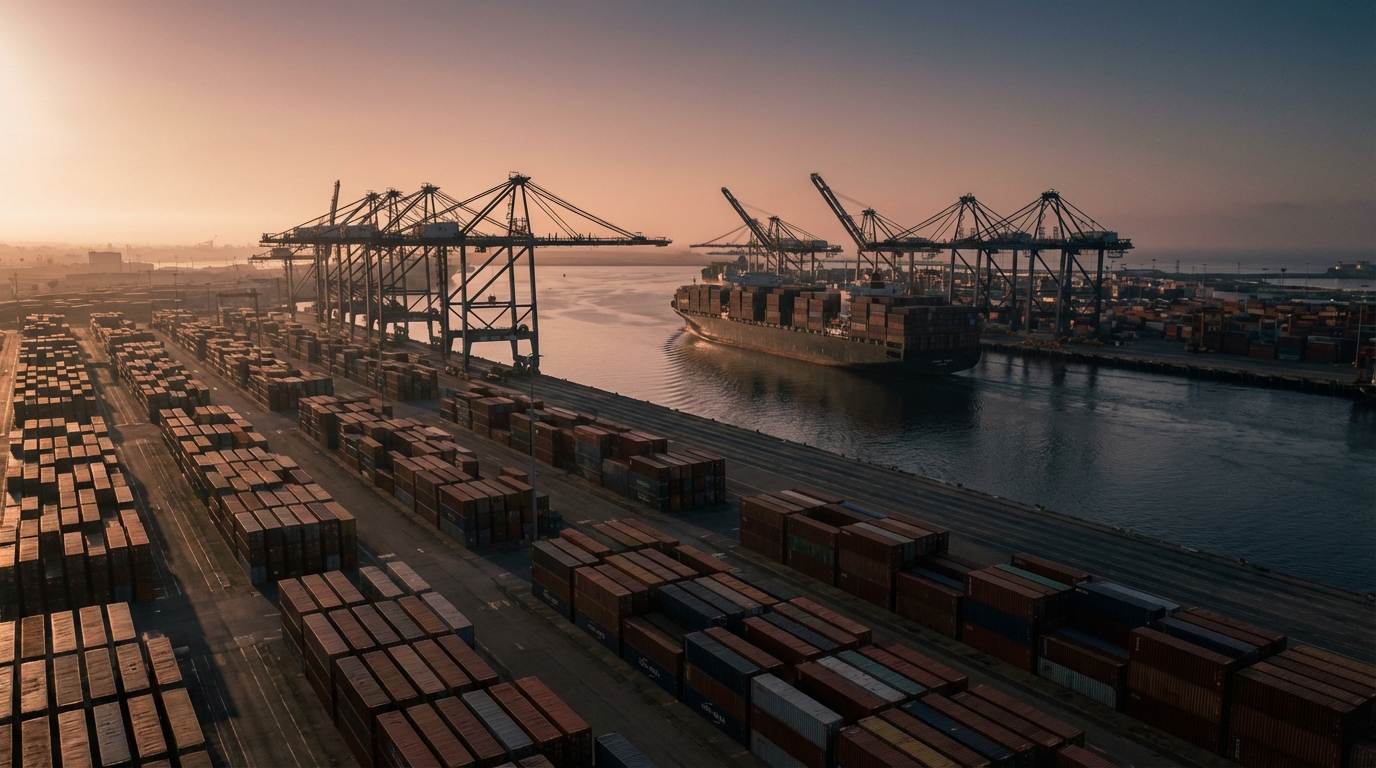
The U.S. is the world’s largest market for imported alcoholic beverages. Wine from Europe, whisky from Scotland and Japan, tequila from Mexico, beer from everywhere — Americans import over $25 billion in alcoholic beverages annually. When IEEPA surcharges were layered on top of existing customs duties and federal excise taxes, the cost of imported alcohol jumped significantly.
The Supreme Court’s February 2026 ruling in Learning Resources, Inc. v. Trump struck down IEEPA tariffs. The CIT’s March 4 order directed CBP to process refunds. For wine importers, spirits distributors, craft beer importers, and beverage companies, the recovery opportunity is real — but the alcoholic beverage sector has unique regulatory considerations that make the process more complex than other product categories.
This guide covers what beverage alcohol importers need to know. For the general recovery framework, see the complete guide to IEEPA tariff refunds.
Which alcoholic beverage products qualify
IEEPA surcharges applied to any alcoholic beverage imported from a covered country during the IEEPA period (February 2025 - February 2026). Major categories:
Wine
Still wines. Red, white, and rose wines from covered countries. Europe was a primary target, with French, Italian, Spanish, and German wines all subject to IEEPA surcharges. See also country-specific recovery analysis.
Sparkling wines. Champagne, prosecco, cava, and other sparkling wines. High-value imports with significant per-bottle IEEPA exposure.
Fortified wines. Port, sherry, madeira, and vermouth from covered origins.
Bulk wine. Wine imported in bulk containers for domestic bottling. High volume, lower per-unit value.
Spirits
Whisky. Scotch whisky, Japanese whisky, Canadian whisky, and Irish whiskey. These premium categories were heavily affected by IEEPA surcharges on European and Asian imports.
Tequila and mezcal. Mexican tequila and mezcal faced IEEPA surcharges on imports from Mexico.
Vodka. Imported vodka from covered European and other origins.
Rum. Caribbean rum from covered countries.
Cognac and brandy. French cognac and other brandies were subject to IEEPA surcharges.
Liqueurs and cordials. Specialty spirits and liqueurs from covered countries.
Beer
Imported beer. Lager, ale, stout, and specialty beer from covered countries. Mexico, Europe, and Asia are major import sources.
Craft and specialty imports. Belgian ales, German wheat beers, Japanese craft beer, and other specialty categories.
Related products
RTD (ready-to-drink) cocktails. Canned cocktails and premixed drinks imported from covered countries.
Non-alcoholic beer and wine. NA versions of alcoholic beverages were also subject to IEEPA surcharges if imported from covered countries.
Ingredients. Hops, malt extracts, and other brewing/distilling ingredients from covered origins.
| Category | Typical HTS | Key Origins | Import Value (Annual U.S.) |
|---|---|---|---|
| Wine (still) | 2204 | France, Italy, Spain | ~$7 billion |
| Wine (sparkling) | 2204.10 | France, Italy, Spain | ~$2 billion |
| Whisky | 2208.30 | Scotland, Japan, Canada | ~$3 billion |
| Tequila | 2208.90 | Mexico | ~$4 billion |
| Vodka | 2208.60 | Europe | ~$500 million |
| Beer | 2203 | Mexico, Europe | ~$6 billion |
The unique regulatory layer: TTB and CBP
Alcoholic beverage imports are regulated by both CBP (Customs and Border Protection) and TTB (Alcohol and Tobacco Tax and Trade Bureau). This dual regulatory structure creates unique considerations for the IEEPA recovery:
CBP customs duties vs. TTB excise taxes
When you import alcoholic beverages, you pay two separate categories of government charges:
- Customs duties (administered by CBP): MFN duty rate + any applicable surcharges including IEEPA
- Federal excise taxes (administered by TTB): FET on wine, beer, and distilled spirits
The IEEPA surcharge is a customs duty, collected by CBP. The recovery process goes through CBP, not TTB. Federal excise taxes are entirely separate and are not affected by the IEEPA ruling.
Customs bond requirements
Alcoholic beverage importers must maintain a customs bond that covers both duties and excise taxes. The IEEPA recovery doesn’t affect your bond requirements going forward, but if you increased your bond during the IEEPA period to cover the higher duty amounts, you may be able to reduce it back to pre-IEEPA levels. Discuss with your customs broker.
COLA and label considerations
Certificates of Label Approval (COLAs) from TTB are required for imported alcoholic beverages. These are unrelated to the IEEPA recovery process. Your COLA status is not affected by filing for a tariff refund.
Importer of record for alcohol
Under TTB regulations, the importer of record for alcoholic beverages must hold a federal basic permit. The IEEPA recovery right belongs to the importer of record on the customs entry. In the beverage industry, this is often:
- The brand owner (if they hold the import permit)
- A licensed importing company that handles customs formalities
- A broker-importer that imports on behalf of the brand
Verify who is the IOR on each entry before filing for recovery. If a third-party importer handled your customs entries, the recovery right may belong to them — and any claim to a share of the recovery depends on your contractual relationship.
Get your free Impact Assessment →
The EU wine and spirits tariff history
European alcoholic beverages have been at the center of multiple tariff disputes in recent years. Before IEEPA surcharges were imposed, European wines and spirits were targeted by Section 232/301 retaliatory tariffs related to the Airbus-Boeing WTO dispute. Those tariffs were suspended in 2021 but created a precedent for beverage-specific trade actions.
When IEEPA surcharges landed in February 2025, European wine and spirits importers were hit again. The IEEPA surcharge applied to all covered European origins — not just those that had been targeted in the WTO dispute.
Important distinction: The earlier Airbus-Boeing tariffs on European wine (25% on non-sparkling wine under 14% ABV) were imposed under Section 301 of the Trade Act. If those tariffs overlapped with the IEEPA period, only the IEEPA component is recoverable. Check your entries carefully for the applicable HTS surcharge codes.
Calculating recovery for beverage importers
Major wine importer (European focus)
Annual import value: $30 million in European wine
- French wine ($12M at 20% IEEPA): $2,400,000
- Italian wine ($10M at 20% IEEPA): $2,000,000
- Spanish wine ($5M at 20% IEEPA): $1,000,000
- Other European ($3M at 20% IEEPA): $600,000
- Total IEEPA recovery: $6,000,000
- Plus statutory interest: ~$360,000-$720,000
Spirits distributor (global sourcing)
Annual import value: $50 million
- Scotch whisky ($15M at 20% IEEPA): $3,000,000
- Tequila from Mexico ($12M at 25% IEEPA): $3,000,000
- Japanese whisky ($5M at 24% IEEPA): $1,200,000
- Cognac ($8M at 20% IEEPA): $1,600,000
- Other spirits ($10M at various rates): $2,500,000
- Total IEEPA recovery: $11,300,000
Craft beer importer
Annual import value: $5 million from covered countries
- Mexican beer ($3M at 25% IEEPA): $750,000
- European craft beer ($2M at 20% IEEPA): $400,000
- Total IEEPA recovery: $1,150,000
The statutory interest adds 2-4% annually on these amounts from date of payment to date of refund.
Industry-specific recovery considerations
Three-tier system implications
The U.S. alcohol industry operates under a three-tier system (producer/importer, distributor, retailer). IEEPA tariff costs were typically absorbed at the importer level and passed through to distributors via wholesale pricing.
For importers: The recovery right belongs to you as the IOR. The refund comes to you.
For distributors: You don’t have a direct claim to the IEEPA refund because you’re not the importer of record. However, if your purchase agreements with importers include tariff adjustment or cost-sharing provisions, you may have a contractual claim. Review your distributor agreements.
For retailers: Same as distributors — no direct claim, but contractual provisions may apply.
If you’re an importer who raised prices to distributors citing IEEPA tariffs, the downstream claims analysis is essential reading. Distributor relationships are long-term partnerships, and managing the recovery conversation proactively preserves the relationship.
Vintage and age-specific inventory
Wine and spirits are often held in inventory for extended periods — aged whisky, vintage wine, allocated spirits. If your IEEPA-period imports include products now held as aged inventory or investment-grade wine, the IEEPA recovery applies to the entry regardless of whether the product has been sold. The duty was paid at import; the refund is tied to the entry, not the disposition of the goods.
Seasonal import patterns
The beverage industry has strong seasonal import patterns:
- Pre-holiday (October-November): Large shipments for holiday retail
- Spring arrivals (March-May): New vintage wines, spring spirits releases
- Summer (June-August): Beer, rose, and refreshment beverages
These seasonal spikes create clusters of entries that will approach the 180-day protest window simultaneously. Map your import calendar against the liquidation timeline.
FDA and bioterrorism prior notice
Imported alcoholic beverages require FDA prior notice filings under the Bioterrorism Act. This is a separate regulatory requirement that doesn’t affect the IEEPA recovery process. However, FDA prior notice records can help verify import timing and shipment details if your customs entry records are incomplete.
Recovery paths for beverage importers
The four recovery paths apply to alcoholic beverages:
PSCs on unliquidated entries. Recent imports are likely still unliquidated — file post-summary corrections immediately through your customs broker.
Protests on liquidated entries in the 180-day window. Given seasonal import clustering, entire seasons’ worth of entries may approach the deadline together. File proactively.
CIT litigation for entries past the window. For large importers and distributors with millions in IEEPA exposure, CIT action is warranted on entries outside the protest window.
Immediate capital through claim assignment. Beverage companies with working capital needs — new brand launches, marketing investment, inventory builds — may prefer near-term cash over waiting 18-36 months for government processing. The treasury cash flow guide covers the modeling framework.
Market impact of the ruling
The IEEPA ruling has broader implications for the imported beverage market:
Pricing adjustments
Importers who raised wholesale prices during the IEEPA period will face pressure to reduce them. Distributors and retailers who absorbed tariff-driven price increases will expect relief. The recovery provides the capital to fund price reductions if competitively necessary.
Brand positioning
Some premium brands maintained pricing during the IEEPA period to protect brand equity, absorbing the tariff as a margin hit. The recovery restores that margin without requiring a price change — potentially the cleanest outcome for luxury brands.
New market entry
The elimination of IEEPA tariffs removes a barrier for new imported beverage brands entering the U.S. market. Products that were priced out of competitiveness during the tariff period can now compete at their natural price point.
Domestic producer impact
Domestic wine, spirits, and beer producers benefited from the tariff-driven price increases on imports. With IEEPA tariffs eliminated, import prices drop, potentially increasing competitive pressure on domestic producers. This is a market dynamic, not a recovery issue — but it affects the strategic landscape for companies operating on both sides.
The craft spirits and small-batch importer
Small and mid-size importers specializing in craft spirits, boutique wines, and artisanal beverages were disproportionately affected by IEEPA surcharges. Unlike large multinational brands with diversified sourcing, small importers often focus on specific regions or producers. When those regions were covered by IEEPA tariffs, the impact was concentrated.
Single-origin portfolios. A small importer specializing in Japanese whisky or natural French wine had 100% of their portfolio subject to IEEPA surcharges. There was no way to diversify away from the tariff — they paid it on every entry.
Margin sensitivity. Small importers typically operate on thinner margins than large distributors. An IEEPA surcharge of 20-25% could consume the entire gross margin on a product, forcing either price increases (risking sales volume) or margin absorption (risking financial viability). The recovery restores margins that may have been absent for a year.
Cash flow criticality. For small importers, even a $100,000-$500,000 IEEPA recovery can be transformative. It may represent a significant portion of annual revenue. The immediate capital option is particularly relevant for small importers who need the cash now rather than waiting 18-36 months for government processing.
Resource constraints. Small importers may not have dedicated trade compliance staff or sophisticated customs broker relationships. If this describes your company, lean on your broker for IEEPA recovery guidance, and consider an Impact Assessment as a no-cost starting point for understanding your recovery opportunity.
Wine-specific recovery nuances
The wine industry has unique import characteristics that affect IEEPA recovery:
Vintage variance. Wine imports fluctuate by vintage — a great vintage in Bordeaux drives higher import volumes the following year. This means your IEEPA-period import volume may be above or below your historical average, depending on vintage quality.
Bulk wine vs. bottled wine. Bulk wine (imported in flexitanks or ISO containers for domestic bottling) has a different HTS classification and typically lower per-gallon value than bottled wine. Both were subject to IEEPA surcharges, but the per-entry recovery amount differs significantly.
Temperature-controlled shipping. Wine requires temperature-controlled shipping, which adds to the landed cost. The IEEPA surcharge was assessed on the customs value (FOB or CIF depending on the transaction value), not on the total landed cost including refrigerated freight. Your refund is based on the IEEPA duty amount as assessed, which is documented in the ES-003 report.
Wine club and DTC imports. Some wine clubs import directly from foreign producers. If the wine club entity is the IOR, it holds the recovery right. Wine imported through a negociant or intermediary may have a different IOR.
Organic, biodynamic, and natural wine certifications. These premium categories often command higher FOB prices, which means higher customs values and therefore higher IEEPA surcharges. The recovery on premium-certified wines can be proportionally larger.
Spirits aging and warehouse considerations
Distilled spirits have unique inventory characteristics:
Bonded warehouse storage. Spirits may be held in CBP-bonded warehouses after import. Duties (including IEEPA surcharges) are not assessed until the spirits are withdrawn from the bonded warehouse for consumption or sale. If you have spirits in bond from the IEEPA period that haven’t yet been withdrawn, the IEEPA surcharge situation is different — the surcharge may not have been assessed yet if withdrawal occurs after the IEEPA tariff was invalidated.
Duty-paid inventory. For spirits already withdrawn from bond and on which IEEPA duties were paid, the standard recovery process applies. File PSCs or protests based on the entry status.
In-transit inventory. Spirits that were in transit (on the water) when the Supreme Court ruling was issued may have had their IEEPA assessment withdrawn or adjusted at the time of entry. Verify with your broker whether IEEPA duties were actually assessed on entries processed after February 20, 2026.
Barrel aging and maturation. Some spirits (particularly whisky and brandy) are imported young and aged domestically. These imports were subject to IEEPA surcharges at the time of import, regardless of the intended aging period. The recovery applies now even though the spirit won’t be sold for years.
Action plan for beverage importers
-
Pull entry data from your customs broker for all alcoholic beverage entries during the IEEPA period.
-
Separate IEEPA from other duties and excise taxes. The IEEPA surcharge is a customs duty under CBP, not a TTB excise tax. Only IEEPA is recoverable.
-
Verify IOR status on every entry. In the beverage industry, the IOR may be a different entity than the brand owner.
-
Map seasonal clusters against the 180-day protest window. Don’t let entire seasons of entries expire simultaneously.
-
Review distributor agreements for tariff pass-through or cost-sharing provisions.
-
Request an Impact Assessment. It provides entry-level analysis of your IEEPA exposure, liquidation status, deadline mapping, and recovery path recommendations.
Imported alcoholic beverages are a high-value, high-margin category where IEEPA surcharges directly impacted profitability. The recovery restores capital that can be reinvested in brands, market development, and inventory — or returned to stakeholders.
Request your free Impact Assessment to quantify your beverage import recovery →