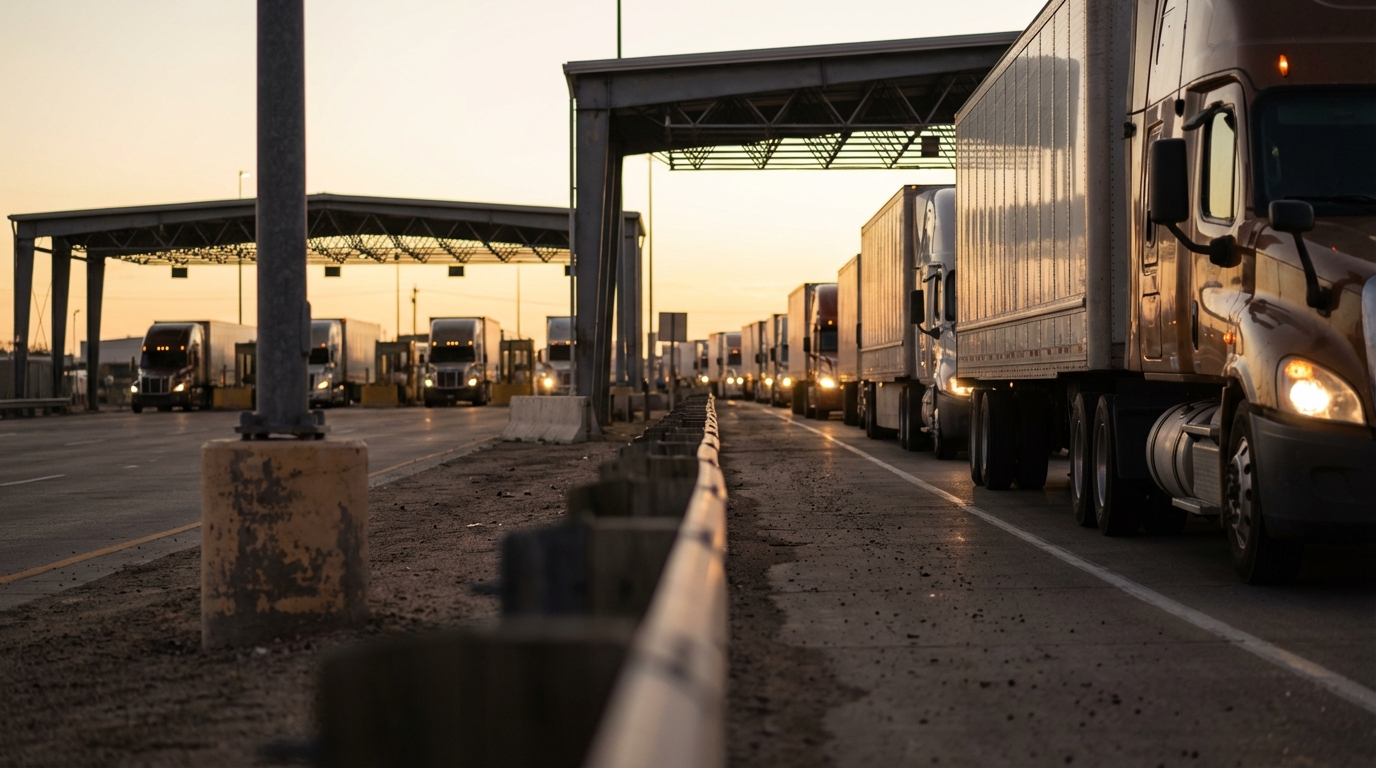
When a shipping container arrives at a U.S. port, one of the first things that happens — before anyone calculates duties, before any money changes hands — is classification. Every single product in that container gets assigned a code from the Harmonized Tariff Schedule (HTS). That code determines the tariff rate, which determines how much you owe Customs and Border Protection (CBP).
If you’re an importer dealing with IEEPA tariff refunds, classification isn’t just an administrative detail. It’s the foundation of your entire refund claim. The codes on your entry summaries are how CBP identifies which imports were hit by the now-invalidated IEEPA surcharges — and which ones qualify for recovery.
Here’s how the system works, from the ground up.
What Is Tariff Classification?
Tariff classification is the process of assigning a standardized code to every imported product. Think of it like a universal product catalog that every country uses. When you ship a stainless steel water bottle from China to the United States, it doesn’t arrive as “a water bottle.” It arrives as a product classified under a specific HTS code that describes exactly what it is, what it’s made of, and what it’s used for.
The classification system exists because tariff rates aren’t one-size-fits-all. A cotton t-shirt faces a different duty rate than a polyester t-shirt. A laptop pays a different rate than a desktop monitor. And a ceramic coffee mug pays a different rate than a stainless steel travel tumbler — even though they both hold coffee.
Why It Exists
Without classification, international trade would be chaos. Imagine trying to collect tariffs on millions of products entering the country every day without a standardized system for identifying what those products are. Every port would interpret product categories differently. Duty rates would be inconsistent. Disputes would be constant.
The Harmonized System (HS) solves this by giving every tradeable product in the world a standardized code. The first six digits are international — every country that uses the HS (which is virtually all of them) uses the same six-digit codes. The United States adds four more digits to create ten-digit HTS codes with additional specificity for U.S. tariff purposes.
The Structure of Classification
Classification follows a hierarchical logic:
| Level | Digits | What It Describes | Example |
|---|---|---|---|
| Chapter | First 2 | Broad product category | 73 = Iron and steel articles |
| Heading | First 4 | Product group | 7323 = Table/kitchen/household articles of iron or steel |
| Subheading | First 6 | Specific product type | 7323.93 = Articles of stainless steel |
| U.S. tariff line | All 8-10 | U.S.-specific rate line | 7323.93.0085 = Stainless steel kitchen articles, not coated |
This hierarchy matters because how import duties are calculated depends entirely on where your product lands in this tree. A misclassification by even one digit can mean a dramatically different duty rate — or in the IEEPA context, the difference between qualifying for a refund and not.
How Products Get Classified
Classification isn’t automatic. Someone has to look at the product, understand what it is, and determine the correct HTS code. In practice, this responsibility usually falls on your customs broker, though the legal responsibility for correct classification rests with the importer of record — that’s you.
The General Rules of Interpretation
The HTS includes six General Rules of Interpretation (GRI) that govern how products are classified. These aren’t suggestions — they’re binding legal rules that CBP, courts, and trade attorneys rely on when classification is disputed.
GRI 1 is the most important: classification is determined first by the terms of the headings and any relevant section or chapter notes. In plain English, you start with the text descriptions in the tariff schedule and see which one matches your product.
GRI 2 covers incomplete or unassembled goods. If you import the parts of a bicycle but not the assembled bicycle, it’s still classified as a bicycle (assuming the parts constitute the “essential character” of the finished product).
GRI 3 handles products that could fit under multiple headings. When there’s ambiguity, you use whichever heading provides the most specific description. A stainless steel kitchen knife goes under “knives” rather than “articles of stainless steel” because “knives” is more specific.
GRI 4 through 6 cover edge cases: goods with no applicable heading, containers shipped with their contents, and classification at the subheading level.
Who Makes the Call
In practice, classification decisions happen at several levels:
- Your customs broker makes the initial classification when filing entry summaries. A good broker knows the tariff schedule cold and can classify most products quickly. If you don’t have a broker yet, understanding what a customs broker does is worth your time.
- CBP Import Specialists review classifications and can reclassify products if they disagree with your broker’s determination. This can happen at the port during entry processing or later during a post-entry audit.
- CBP Binding Rulings provide advance classification guidance. You can request a ruling letter before you import, and CBP will tell you how they’d classify the product. These rulings are legally binding on CBP (though not on courts).
- The Court of International Trade (CIT) is the final arbiter when classification disputes can’t be resolved administratively. If you disagree with CBP’s classification, you can challenge it in the CIT.
Why Classification Matters for IEEPA Refunds
Here’s where this gets directly relevant to your refund. The IEEPA tariffs that the Supreme Court struck down weren’t applied to all imports — they were applied to imports classified under specific HTS 9903 codes. These are special tariff codes in Chapter 99 of the HTS that layer additional duties on top of the normal tariff rate.
When the executive orders imposing IEEPA tariffs were issued, they designated specific HTS subheadings under 9903.01 and 9903.02. If your product was classified under a heading covered by those executive orders, the IEEPA surcharge was applied. If it wasn’t, no surcharge.
How Classification Determines Refund Eligibility
Your refund claim is built on your entry summaries — the documents your customs broker filed with CBP for each shipment. Those summaries list the HTS codes for every product in every entry. The IEEPA surcharge codes (under 9903) appear as additional duty lines on those summaries.
To determine whether you’re eligible for a refund, you need to verify that:
- Your entries include HTS 9903 codes corresponding to the IEEPA executive orders
- The underlying classification of your products was correct
- The IEEPA surcharge was actually collected (not just assessed)
If any of these elements are off, your refund calculation could be wrong. An incorrectly classified product might have been charged an IEEPA surcharge it shouldn’t have been — or might have avoided a surcharge it should have paid.
Get your free Impact Assessment →
Common Classification Mistakes
Classification errors are more common than most importers realize. U.S. Customs estimates that a significant percentage of entries contain classification errors. Most don’t result in enforcement action because the duty rate difference is small or the error favors the government. But in the IEEPA context, classification errors can have outsized consequences.
Material Composition Errors
Products are frequently classified based on their primary material. A bag that’s 51% leather and 49% nylon gets classified differently than one that’s 51% nylon and 49% leather. If your supplier changed materials mid-production and didn’t tell you, your classification could be wrong across dozens of entries.
Function vs. Form
Some products could reasonably fall under multiple headings based on whether you classify by what they’re made of or what they do. A stainless steel thermos could be classified as a “vacuum flask” (heading 9617) or as a “table, kitchen, or household article of stainless steel” (heading 7323). The correct classification depends on the GRI analysis, and reasonable people can disagree.
Country-of-Origin Complications
Classification itself doesn’t depend on country of origin — an HTS code is the same whether your product comes from China, Vietnam, or Germany. But the IEEPA tariffs were country-specific. China-origin goods classified under the same HTS code as Vietnam-origin goods faced the IEEPA surcharge while the Vietnam goods didn’t. So if your country of origin was incorrectly declared, the IEEPA surcharge may have been applied (or not applied) incorrectly.
Tariff Engineering
Some importers deliberately structure their products to achieve a more favorable classification — a practice called tariff engineering. For example, importing a product in an unfinished state to classify under a lower-duty heading, then completing manufacturing domestically. This is legal when done correctly, but it can create complications in the refund context if the classification that was advantageous for normal duties also affects IEEPA surcharge eligibility.
How to Check Your Classifications
If you’re pursuing an IEEPA refund, it’s worth reviewing your classifications — not to second-guess your broker, but to make sure your refund claim is built on solid ground.
Pull Your Entry Summaries
Your entry summaries (CBP Form 7501) list the HTS code for every line item in every entry. If you have access to ACE (the Automated Commercial Environment), you can pull these directly. Otherwise, ask your customs broker for copies. For a broader understanding of how the import duty system works, your entry summaries are the best place to start.
Verify HTS 9903 Codes
Look for duty lines under HTS Chapter 99, specifically codes beginning with 9903.01 or 9903.02. These are the IEEPA surcharge codes. Each code corresponds to a specific executive order and country of origin. The HTS 9903 codes guide breaks down which codes map to which tariff actions.
Cross-Reference With Product Descriptions
Compare the HTS codes on your entry summaries with the actual product descriptions. If something looks off — for example, your product is described as “plastic household articles” but classified under a heading for “articles of iron or steel” — flag it for review. Classification errors can cut both ways: they might increase your refund or decrease it.
Check the USITC Database
The U.S. International Trade Commission maintains the official HTS database at hts.usitc.gov. You can look up any HTS code to see its description, duty rate, and any special tariff programs that apply. This is the authoritative source — if there’s a discrepancy between what your broker coded and what the USITC database shows, start asking questions.
Classification Disputes and Your Refund Timeline
Classification disputes can affect your refund timeline in several ways. If CBP believes your products were misclassified, they may challenge your entry summaries before processing a refund. This can delay things significantly.
Pre-Refund Audits
CBP has the authority to audit entry summaries before issuing refunds. If your classifications are flagged during an audit, the refund process pauses until the classification question is resolved. This is one reason why having clean, defensible classifications matters — not just for getting the refund, but for getting it on time.
Protest-Level Classification Challenges
If CBP reclassifies your products and you disagree, you can file a CBP protest challenging the reclassification. But here’s the catch: if you’re also filing a protest to recover IEEPA tariffs, you may end up with two separate protest issues on the same entries. This adds complexity and can extend the timeline.
Interaction With Recovery Paths
Your classification status interacts with all four recovery paths. For post-summary corrections on unliquidated entries, classification accuracy is essential because you’re amending the entry summary itself. For protests on liquidated entries, classification disputes can be raised alongside the IEEPA refund claim. For CIT litigation, classification issues may become separate legal questions. And for immediate capital through claim assignment, the buyer’s valuation of your claim will factor in any classification risk.
The Role of Rulings and Precedent in Classification
Classification isn’t just about reading the HTS and picking a code. There’s a whole body of rulings, precedent, and institutional knowledge that informs how products are classified.
CBP Binding Rulings
If you’re unsure how a product should be classified, you can request a binding ruling from CBP before you import. You submit a detailed description of the product — materials, function, dimensions, intended use — and CBP issues a ruling letter assigning an HTS code. That ruling is legally binding on CBP for your specific product.
Binding rulings are public and searchable through CBP’s CROSS database (rulings.cbp.gov). If someone else has already requested a ruling for a product similar to yours, you can use that ruling as guidance — though it’s technically only binding for the party who requested it.
Court Decisions
When classification disputes reach the Court of International Trade or higher courts, the decisions create legal precedent. These precedents can affect thousands of importers. For example, a court ruling that determined whether a particular type of LED panel should be classified as a “lamp” or a “display” affected the classification (and duty rate) for every importer of similar products.
The Informed Compliance Publications
CBP publishes “Informed Compliance Publications” — plain-language guides that explain how specific product categories are classified. These cover everything from textiles to footwear to food products. They’re free, publicly available, and written for importers who want to understand the classification logic for their products.
Why Precedent Matters for IEEPA
If your products have a clear classification history — binding rulings, court decisions, consistent broker treatment — your IEEPA refund claim is stronger because there’s less room for CBP to challenge the classification as part of the refund process. Conversely, if your products have a disputed or ambiguous classification history, you may face additional scrutiny during the refund.
This is another reason why reviewing your classifications now, before you file your refund claim, is valuable. Better to identify and resolve any classification ambiguity proactively than to have it surface during CBP’s refund review.
What You Should Do Now
If you’re an importer who paid IEEPA tariffs and you’re pursuing a refund, classification is the bedrock of your claim. You don’t need to become a classification expert — that’s what your customs broker and trade attorney are for. But you should understand the basics so you can ask the right questions and spot potential issues before they delay your recovery.
Here’s a practical checklist:
- Get copies of your entry summaries — every one that includes HTS 9903 codes
- Verify the HTS codes match your actual products
- Confirm the country of origin declarations are accurate
- Flag any entries where you changed products, suppliers, or materials mid-period
- Ask your broker if any of your classifications have ever been questioned by CBP
Understanding what the IEEPA law actually says and how it intersects with the tariff classification system will help you navigate the refund process more effectively. And if you want a professional review of your entries, classifications, and refund potential, an Impact Assessment does exactly that.
The IEEPA refund window won’t stay open forever. Classification questions are worth resolving now — before they become obstacles during the recovery process.
Request a free Impact Assessment to get an entry-by-entry analysis of your IEEPA tariff exposure, including classification verification and recovery path recommendations. The assessment is confidential, covered by mutual NDA, and delivered within 5-10 business days.